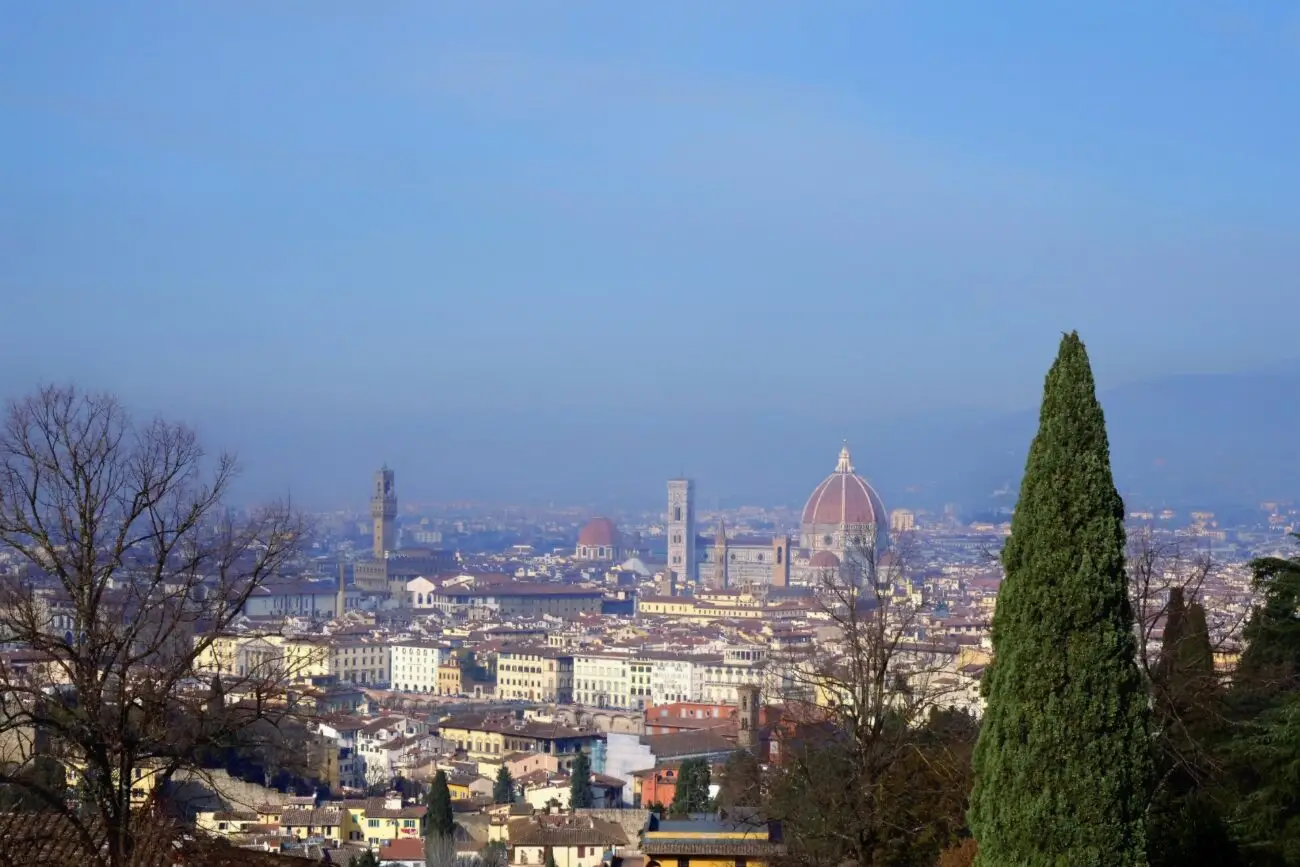
I visited Florence at the end of December to ring in the New Year, as part of a longer Italy trip that began in Venice and would eventually take me down to southern Italy. The city was cold, crowded and festive, layered in winter light and holiday energy.
However, while my experience was firmly in winter, this Florence travel guide is designed to help you plan your trip in any season, whether you’re visiting in summer, spring, autumn or during the quieter winter months.
If you’re looking for a more personal account of my winter experience in Florence, including New Year’s Eve above the city, you can read the full story here.
Florence is compact, highly walkable and dense with art, food and history. Here’s what to see, where to eat, where to stay and how to navigate the city efficiently. First, let’s start with the essentials.
Things to Do in Florence
Florence is compact, but dense with history. You can cover a lot on foot, but prioritising helps. Here are the key places to explore, whether you’re visiting for two days or five.
Cathedral of Santa Maria del Fiore (Duomo)
Even if you do not enter, the exterior alone is worth your time. The marble facade in white, green and pink dominates the skyline and anchors the historic centre. Walk around the entire structure. The rear side is often less photographed but reveals the building’s age and weathering.
If you plan to climb Brunelleschi’s Dome or Giotto’s Bell Tower, book tickets in advance, especially during peak seasons.
For a comprehensive tour of the Florence Duomo Complex & Giotto’s Bell Tower that includes AudioApp, click here.
FYI – Brunelleschi’s Dome is currently close for renovations at the time of writing)
Piazza della Signoria
An open-air gallery and one of Florence’s most important civic spaces. This is where political history and sculpture intersect. You’ll find:
- A replica of Michelangelo’s David
- The Fountain of Neptune
- The Loggia dei Lanzi with its dramatic statues
It’s busy throughout the day but worth lingering in.
Galleria dell’Accademia
Home to the original Michelangelo’s David, this is one of Florence’s most visited museums.
If seeing the original sculpture up close is important to you, reserve tickets early. Timed entry helps avoid long queues, especially during peak season.
That said, if your main goal is simply to see David and you would rather skip the ticketed museum experience, there are two public replicas in Florence:
- A full-scale marble replica in Piazza della Signoria, positioned outside Palazzo Vecchio.
- A bronze replica at Piazzale Michelangelo, overlooking the city.
While nothing replaces seeing the original in person, these replicas offer impressive alternatives without the wait or entrance fee. BUT…If FOMO is real and David is non-negotiable, secure your ticket ahead of time. Book tickets here
Uffizi Gallery
One of the world’s most important Renaissance art museums. Highlights include works by Botticelli, Leonardo da Vinci and Caravaggio.
If Renaissance art is a priority, this deserves half a day. Advance booking is highly recommended year-round. Book your entrance that includes an audio guide here.
Other Notable Places to Visit
- Palazzo Vecchio – Medieval palace in Piazza della Signoria with tower views.
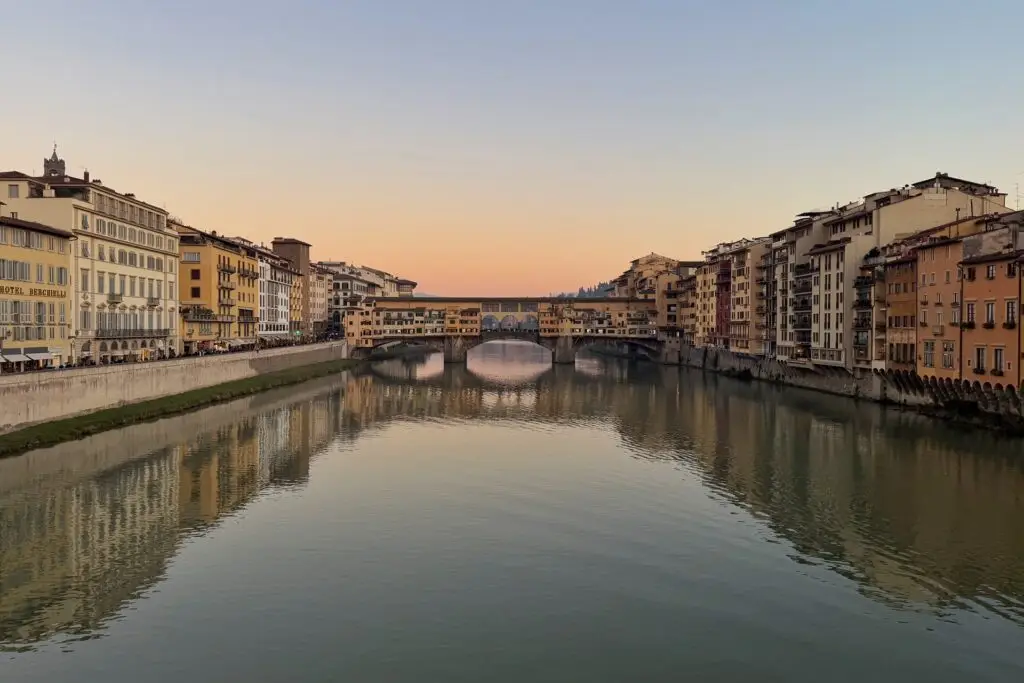
- Ponte Vecchio – Florence’s most famous bridge, lined with historic jewellery shops. It is one of the few bridges in the city spared during World War II.
- Basilica di Santa Croce – Final resting place of Michelangelo and Galileo.
- Piazzale Michelangelo – Best panoramic view of Florence, also great place to watch the sunset.
- Basilica di San Miniato al Monte – Romanesque church above the city.
- San Miniato Cemetery – Right behind Basilica di San Miniato al Monte, Marble tombs and sculpted angels in a peaceful hillside setting. Think of it as a walk through a park, it really is beautiful.
- Oltrarno District – Artisan neighbourhood across the Arno, ideal for slower exploration.
- CLET Studio – Street artist, Clet Abraham’s studio and shop featuring altered traffic sign art.
Where to Eat in Florence
Have you really been to Florence if you haven’t had a Florentine steak? Vegetarians, you are respectfully excluded from this particular debate.
Florence is known for simple, ingredient-driven Tuscan cuisine. Reservations are recommended year-round, especially for dinner.
Florentine Steak (Bistecca alla Fiorentina)
- Trattoria Dall’Oste – Well known for Chianina beef and large portions. Reliable choice if you want the full steak experience.
- Buca Poldo – Highly recommended by our taxi driver for Florentine steak. Call ahead for reservations. We were unable to secure one.
Tip: Florentine steak is typically served rare and sold by weight. Portions are large and ideal for sharing.
Other Places to Eat
- Trattoria Sant’Agostino – One of the most memorable meals of the trip. Order the whole onion filled with pecorino and the pappardelle with wild boar ragu.
- Mercato Centrale – Ideal for casual lunches with two floors of multiple vendors under one roof. Easier seating if you arrive before peak hours.
- F.lli Perini. – Hearty, filling meals. Try the Pork Belly or the Fried Zucchini flowers (very tempura like)
- Da Nerbone – Local favourite near the market. Known for panini bollito (brisket sandwich), porchetta sandwich and lampredotto (cow stomach sandwich, if you can stomach it).
- Antica Porchetteria Granieri 1916 – Traditional porchetta sandwiches.
- F. N. Pasta Fresca – Fresh pasta to go. Affordable at 6euros.
- La Prosciutteria Firenze – Casual charcuterie boards and platters.
- Babae – One of Florence’s revived wine windows serving drinks through a historic 16th-century opening.
Gelato
- Mancuso Gelati – Solid choice for classic flavours.
- Gelateria dei Neri – Frequently recommended.
- Sbrino – Gelatificio Contadino – Known for more artisanal flavours.
Getting to Florence
Florence is well connected by train and air, making it easy to include in a multi-city Italy itinerary.
By Air
Nearest airports:
- Florence Airport (FLR / Peretola) – about 20–30 minutes from the city centre by taxi or tram.
- Pisa International Airport (PSA) – about 1 hour by train to Florence.
If flying internationally, many travellers arrive via Rome or Milan and connect by train.
By Train
Florence’s main station is Firenze Santa Maria Novella (SMN), located within walking distance of the historic centre.
High-speed trains connect Florence to:
- Venice – approx. 2 hours
- Rome – approx. 1 hour 30 minutes
- Milan – approx. 1 hour 50 minutes
- Bologna – approx. 40 minutes
If you are travelling between major cities, the train is the most efficient option. Book high-speed tickets in advance for better pricing.
Getting Around Florence
Florence is highly walkable.
- Most major sights are within 15–20 minutes on foot.
- Taxis are available but rarely necessary if staying central.
- Buses operate throughout the city, though visitors typically rely on walking.
If you stay within the historic centre or Oltrarno, you will likely not need public transport.
Best Time to Visit Florence
- Spring (April to June) – mild temperatures, longer daylight hours, busy but not yet peak summer, good balance of weather and atmosphere.
- Summer (July to August) – hot, often above 30°C, peak tourist season, long queues at major attractions, lively evenings but crowded afternoons.
- Autumn (September to October) – warm, comfortable temperatures, slightly fewer crowds than summer, beautiful golden light along the Arno.
- Winter (November to March) – cooler temperatures, fewer tourists outside holiday periods, lower accommodation rates, shorter daylight hours.
I visited at the end of December to ring in the New Year. It was cold but festive, with noticeable holiday crowds. Outside the holiday window, winter feels slower and more local.
Where to Stay in Florence
I stayed at Casa per Ferie Regina Del Santo Rosario, a monastery-style accommodation within walking distance of the historic centre.
I have now stayed in multiple monastery-style accommodations across Italy booked through monasterystays.com and find them consistently reliable. They are usually simpler in design but well maintained, centrally located and priced more reasonably than boutique hotels in the same area. If you value quiet, security, practicality and good location over luxury finishes, monastery stays are often an excellent option.
Best Areas to Stay in Florence
- Historic Centre (Duomo / Piazza della Signoria) – Most convenient for first-time visitors, walking distance to major sights, lively atmosphere, higher prices and heavier foot traffic.
- Oltrarno – Across the Arno River, more residential and artisan-driven, fewer tour groups, slower pace, good balance between local life and access to the centre.
- Santa Maria Novella (near SMN Station) – Practical for short stays and early departures, excellent train access, often better value, slightly less atmospheric than the core centre.
- San Marco / Accademia Area – Close to the Accademia Gallery, quieter than the Duomo zone, still walkable to everything.
- Santo Spirito – Lively local square, good food scene, popular with younger travellers, especially pleasant in the evenings.
- San Niccolò – Small neighbourhood at the base of Piazzale Michelangelo, quieter, charming streets, good for those who prefer to be slightly removed from tourist density.
Where to Shop in Florence
- Mercato di San Lorenzo – The main outdoor leather market near Mercato Centrale. Rows of stalls selling bags, jackets, belts and wallets. Quality varies, so inspect stitching and material before buying. Expect tourist pricing and some negotiation.
- Giorgio Leather Factory 1966 – A more curated leather shop recommended by locals. Better for those who prefer a quieter shopping experience over market stalls.
- Officina Profumo-Farmaceutica di Santa Maria Novella – One of the oldest pharmacies in the world. Ideal for perfumes, soaps and herbal products. A refined alternative to generic souvenirs.
- Giunti Odeon – Libreria e Cinema – A bookstore housed inside a historic cinema. Worth visiting even if you don’t buy anything.
- Citees Firenze – Artist-designed T-shirts featuring Florence-inspired graphics. A fun, wearable souvenir that feels more original than standard tourist merchandise. Personally bought a couple for myself and as gifts.
- Street artists around the Duomo – Independent painters selling original works. If you have luggage space, original art makes a meaningful souvenir.
Day Trips from Florence
- Pisa – About 1 hour by train. Home to the Leaning Tower and Piazza dei Miracoli. Easy half-day trip.
- Siena – Around 1.5 hours by train or bus. Medieval streets and Piazza del Campo.
- Bologna – Under 1 hour by high-speed train. Excellent food city known for tagliatelle al ragù and portico-lined streets.
- Chianti Region – Tuscan wine country between Florence and Siena. Best explored by rental car or organised wine tour.
- Lucca – Around 1.5 hours by train. Compact town with intact Renaissance walls you can walk or cycle.
- Cinque Terre – Approximately 2.5 to 3 hours by train. Colourful coastal villages and scenic hiking routes. Best done as a full-day trip.
How to book tickets:
Regional train tickets (to places like Pisa, Siena and Lucca) can usually be purchased at the station on the day of travel or online via Trenitalia. High-speed trains (for destinations like Bologna) are best booked online in advance for better pricing. Organised tours, especially to Chianti, should be reserved ahead during peak seasons.
Florence may be compact, but it rewards intention. Prioritise what matters to you, book ahead where necessary, and leave space for wandering. Whether you visit in winter or high summer, the city reveals itself differently each time.