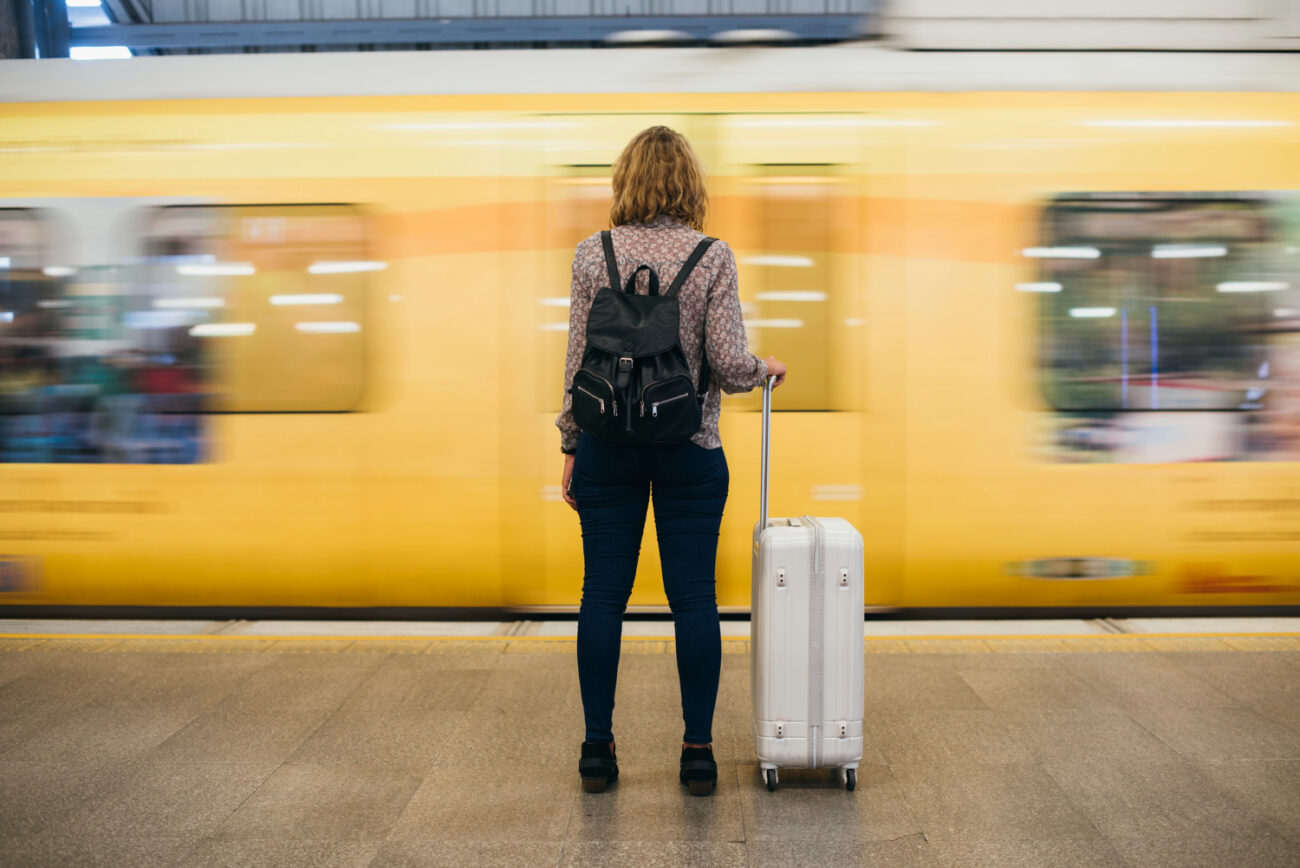
A practical guide to bags, phones, cards, luggage, and not looking like an easy target
As a Type A traveller, I like being prepared. Flights booked, accommodation sorted, a rough itinerary mapped out. Not every hour accounted for, because I still want breathing space, but enough that I don’t land in a new city completely clueless and immediately make myself a target for pickpockets.
This matters even more when you’re travelling solo. You may have seen the videos of the Italian woman in Venice shouting, “Attenzione, pickpocket!” whenever she spots suspected pickpockets in crowded tourist areas. If you haven’t seen them, the idea is simple: in places like Venice, Milan, Rome, Paris, Barcelona, and other popular European cities, pickpocketing is common enough that locals and travellers talk about it openly.
Online, it can look dramatic. In real life, avoiding pickpockets is usually much less exciting. It’s often about boring little habits: how you carry your bag, where you keep your phone, how often you take your wallet out, whether your passport is tucked properly inside your bag or practically waving hello from the top. It may sound like fearmongering, but I don’t see it that way. I still travel, wander, take photos. Stopping to look at beautiful buildings, eat pastries, and get lost in side streets. I just try not to look like the easiest person in the crowd for pickpockets to notice.
This isn’t a “be scared of every stranger” guide. It’s just how I try to move through a place with my brain switched on.
Quick Checklist to Avoid Pickpockets
If you only remember a few things, make it these:
- Keep your bag zipped and in front of your body.
- Don’t keep your phone, wallet, or passport near the top of your bag.
- Use Apple Pay, Google Pay, or another digital wallet so you don’t keep taking cards out.
- Keep some notes and coins in an easy pocket for quick purchases.
- Separate your cards, cash, and passport so one stolen wallet doesn’t ruin the whole trip.
- Don’t leave your phone on café tables.
- Avoid flashy jewellery, obvious designer bags, or anything that makes you look like an easy target.
- Be extra alert during transit moments: train stations, metro exits, queues, ticket machines, and luggage days.
- Carry less when you can. The more things you carry, the less you notice.
How Pickpockets Usually Work
Pickpockets aren’t always lone cartoon villains quietly slipping a hand into someone’s pocket. In crowded tourist areas, they often rely on distraction, speed, and sometimes teamwork. One person may create the distraction while another takes the item. Someone might bump into you, stand too close, block your way while you’re getting on or off public transport, ask for directions, shove a petition in your face, or create a sudden commotion.
The annoying thing is that travel already makes you distracted. You could be checking the train board, dragging luggage, trying to find the right exit, and half-looking at Google Maps because the blue dot has decided to place you across the road from where you actually are. Add heat, hunger, the strong urge to pee, and a bag cutting into your shoulder, and your attention is no longer fully on your surroundings. Most of the time, you’re not being careless. You’re just dealing with too many things at once.
That’s why I try to be extra aware in transition moments: getting on and off trains, entering stations, buying tickets, leaving cafés, standing in queues, watching street performers, checking maps, or dragging luggage through a crowded area. Pickpockets don’t need you to be distracted all day. A few seconds is enough.
This is also why old European cities can feel different from travelling around parts of Asia. Many historic centres were built long before wheeled suitcases, modern metro systems, and millions of annual tourists. You get narrow lanes, busy squares, crowded bridges, compact trains, outdoor cafés, and tourist attractions packed into a very small area. It’s beautiful, yes. It’s also the perfect setup for distraction theft.
Blend In: Look Like You Don’t Have Money
One of my main rules when I travel solo is something I always say half-jokingly: look like you don’t have money. I don’t mean look terrible. I mean don’t look flashy. No obvious expensive jewellery. No designer handbag that announces itself from across the street. No wallet sticking out. No phone dangling carelessly from your back pocket. No “please rob me, I’m overwhelmed and carrying my entire net worth” energy.
The more inconspicuous, the better, especially in places where pickpockets are known to target distracted tourists. Of course, this depends on where you are. There are parts of Asia where I feel more relaxed, or where the type of petty theft feels less aggressive than in some European tourist hotspots. But safer doesn’t mean you switch off completely.
If you’re from Singapore or Southeast Asia, this can take some adjusting. We’re used to a certain level of public order. We reserve tables with tissue packets. We put bags on empty chairs. We walk around with phones out because we’re checking directions, replying to messages, paying for things, or taking photos of food. None of this is wrong at home, but some habits don’t travel well. Whether I’m in Europe, Asia, or anywhere else, my general approach is the same: blend in where possible, stay aware, and don’t advertise what I’m carrying.
How to Make Your Bag Less Easy for Pickpockets
When it comes to travel bags, I prefer zips over flaps. A flap bag may look nice, but if there’s no zip inside, it can be too easy for someone to reach in. If I do use a flap bag, I prefer one with a proper zipped compartment within it. For shoulder bags and crossbody bags, I keep the bag in front of my body, not hanging behind me. In crowded places, I usually keep one hand lightly on it. Not in a dramatic clutching-my-pearls way, just enough that I can feel if someone gets too close or if the bag moves.
Inside the bag, important things shouldn’t sit near the opening. Passport, wallet, purse, and backup cards shouldn’t be peeking out from the top like they’re asking to be taken. I usually keep them in an inner zipped compartment or lower down in the bag. I also keep my passport in a Ziploc bag. Is this glamorous? No. But passports and water don’t mix. Rain happens. Water bottles leak. Bags get placed on wet floors. Accidents happen. A Ziploc bag is cheap, light, and one less thing for me to worry about.
One small thing I sometimes use is an S-biner or small S-ring carabiner to secure the zip pulls on my bag. I prefer these over the usual D-ring style because the small ones can be a little annoying to open. And yes, if it’s annoying for a thief, it’s also annoying for me. That’s kind of the point. I’m not trying to build an impenetrable fortress around my bag. I’m just trying to add friction. Most pickpockets are looking for something fast and opportunistic. If my bag takes slightly more effort to open than the next person’s bag, that may be enough of a deterrent.
Use Your Wallet Less
In many cities now, contactless payment is widely accepted. When I travel, I use Apple Pay as much as possible because my cards are linked to my phone, which means I don’t have to keep taking my physical card out in public. This matters because every time you open your wallet, you’re also showing people where you keep it.
I also like using travel cards such as YouTrip, Revolut, or Wise. These are multi-currency travel cards that you can top up with the amount you need, instead of exposing your main bank account or carrying too much cash. I usually link the travel card to Apple Pay too, so the physical card becomes more of a backup than something I reach for constantly.
For small purchases, I still keep some notes and coins in an easy pocket. Nothing major. Just enough for a drink, toilet entry, small snacks, or places that still prefer cash. The whole point is to separate things. Daily access should be easy. The more important stuff should be harder to reach. Emergency backup should sit somewhere else entirely. If one wallet disappears, I don’t want the whole trip to disappear with it.
A Quick Note on RFID Wallets and Sleeves
RFID stands for Radio Frequency Identification. In travel-shopping language, RFID-blocking wallets and card sleeves are usually sold as a way to protect your cards from being scanned wirelessly. I do use RFID sleeves sometimes because they’re cheap, light, and easy to slip into a pouch. But I don’t treat them as magic.
For most travellers, the bigger risk is still someone physically taking your wallet, phone, or bag. So yes, use RFID sleeves if they give you peace of mind, but don’t let that become your only security habit. A zipped bag, separated cards, Apple Pay, and not constantly opening your wallet in public matter more.
Treat Your Phone Like a Travel Document
When you travel, your phone isn’t just your phone. It’s your map, camera, boarding pass, hotel booking, banking app, translator, transport app, and emergency contact list. Possibly your entire personality at this point. So I treat my phone like a travel document.
A phone lanyard helps. You can wear it around your neck or crossbody, and it keeps the phone attached to you when you’re navigating, taking photos, or moving through crowded places. It doesn’t mean your phone is now invincible. It just makes it harder to snatch from your hand or leave behind on a table. And please, don’t leave your phone on café tables. Especially not at outdoor tables near the street. Same goes for wallets, cameras, and sunglasses.
If I need to check Google Maps, I try not to wander around slowly while staring at my screen, looking visibly lost. I step to the side, stand near a wall or shopfront, check the map, then move. Do I still get lost? Absolutely. But I try not to look like I’ve fully surrendered to the city.
Hidden Storage Is for Backup, Not Daily Digging
Money belts, slim waist pouches, and runner-style belts can be useful when travelling. I use them for things I don’t need to access constantly: backup card, emergency cash, ID, sometimes passport, depending on the city and what I need for the day. For women, there are also anti-theft bra pouches that clip onto the front or side of your bra strap. Depending on your body and comfort level, some people also slip emergency cash or cards into the bra itself.
But to me, this kind of hidden storage is for safekeeping, not daily use. If you keep reaching under your clothes every time you need money, you’ll either look suspicious or like a crazed woman. Possibly both. So some notes and coins in an easy pocket are for small, quick purchases. Apple Pay is for daily payment. The bag is for normal carry. The hidden pouch is for backup and emergencies.
In winter, this is easier because I can hide things under sweaters, coats, and layers. Summer takes more thought. A waist pouch under clothes can be uncomfortable in the heat, so I may rely more on a secure bag and only carry what I need for the day. The key idea is separation. Don’t keep all your cash, cards, passport, and phone in one place. If something happens, you want it to be inconvenient, not catastrophic.
For Men: Please Stop Using the Back Pocket
This deserves its own small note because I still see men travelling with fat wallets in their back pockets. Please don’t.
Keep your wallet in your front pocket, not your back pocket. Better yet, carry a slimmer wallet with only the essentials for the day. You don’t need every membership card, receipt, expired voucher, and mysterious laminated thing you’ve owned since 2014. A wallet shouldn’t look like a multiple-ingredient sandwich. The slimmer it is, the easier it is to secure and the less obvious it looks.
The More You Carry, the Less You Notice
This is something my brother always reminds me of, and he’s right: the more things you carry, the less you notice. This applies to camera gear. It applies to backpacks. It applies to transit days when you’re moving between airports, train stations, hotels, and Airbnbs with luggage, tote bags, jackets, snacks, and your phone open on Google Maps.
When you’ve got too many things on you, your attention gets split. You’re thinking about your suitcase, your backpack, your handbag, your passport, your ticket, the platform number, the stairs, the lift, and the fact that your arm is dying. You’re not careless. You’re overloaded.
As someone who travels with a camera, I’ve had to learn this the hard way. In the past, I’d want to bring extra lenses, maybe a tripod, maybe “just in case” gear. Over time, I realised every extra thing I carry is one more thing to manage. So now I plan my day bag around the itinerary.
If I’m just wandering through the streets of Venice, one camera and one lens may be enough. If I’m going into San Marco Basilica, churches, or places with ceilings, frescoes, and interiors I want to photograph properly, then maybe I bring the wider lens. What I try not to do anymore is carry everything just because I’m afraid of missing a shot. Travelling light isn’t just packing advice. It’s safety advice too. The less I carry, the more attention I have left for what’s happening around me.
Backpack Security for Camera Gear, Day Bags, and Pickpockets
If I carry a backpack, I try not to keep valuables in the top or outer pockets. Important things go deeper inside, preferably in an inner zipped compartment. If I’ve got camera gear, I may cover or wrap things with a scarf, sweater, or pouch so nothing valuable is sitting right at the opening.
In crowded places, I carry the backpack in front of me or keep one hand on it. Yes, it looks a bit touristy. But so does crying outside a police station because your passport is gone. Also, check bag size rules before going to museums, churches, galleries, or attractions. Some places don’t allow large backpacks and will require you to leave them in a locker or cloakroom. A security bag is only useful if you’re allowed to bring it in.
Don’t Leave Valuables Sitting Out in Your Accommodation
This isn’t really about pickpockets, but it’s still part of the same general habit: don’t make your valuables easy to access. If I’m leaving my laptop, camera gear, spare cash, backup cards, or extra lenses in my accommodation, I try not to leave them sitting out in the open. I’ll usually keep them inside my suitcase and lock it, even if it’s just a basic luggage lock. If there’s a safe, I may use it for my passport, backup card, or cash, depending on the place.
Is a locked suitcase the same as a vault? Obviously not. But again, the point is friction. If someone enters the room, I don’t want my laptop and camera sitting on the desk like a welcome display. This applies to hotels, Airbnbs, guesthouses, and even private rooms in hostels. I’m not saying you need to be suspicious of every cleaner, host, or staff member. Most people are honest. I just prefer not to leave expensive things lying around when I’m not there.
Cafés, Restaurants, and the Singaporean Habit We Must Unlearn
In Singapore, we’re used to putting bags on the chair beside us, behind us, or sometimes using them to reserve a table. Don’t do this when travelling.
At cafés and restaurants, I keep my bag on my lap, between my legs, or with the strap looped around my leg. It may not be the most comfortable thing in the world, but at least I know where my bag is. Don’t hang your bag on the back of your chair, especially in a busy café or restaurant. Don’t place your phone on the table. Wallets, cameras, and sunglasses shouldn’t be left sitting out either.
Outdoor seating is lovely, but it also means people can walk past easily. Keep your things within reach and within sight.
Best Setup to Avoid Pickpockets While Travelling Solo
Here’s the simple version of what works for me:
- Main bag: zipped crossbody, shoulder bag, or backpack depending on the day.
- Phone: lanyard or secure front pocket.
- Daily payment: Apple Pay or another digital wallet.
- Quick cash: a few notes and coins in an easy pocket.
- Cards: travel card for daily use, backup card stored separately.
- Passport: Ziploc bag, inner compartment, hidden pouch, or hotel safe depending on the day and local rules.
- Camera gear: only what I realistically need for that day’s itinerary.
- Transit days: fewer loose bags, more awareness, no hero-level overpacking.
- Accommodation: laptop, camera gear, extra cards, and spare cash kept out of sight, usually locked in a suitcase or safe.
This isn’t about buying one magical anti-theft product. It’s about building a system that makes you less easy to distract and less easy to steal from.
Final Thought
Avoiding pickpockets isn’t about being suspicious of everyone. Most people aren’t trying to steal from you. Most trips will be perfectly fine. Many cities with pickpocketing problems are still beautiful, worth visiting, and full of kind people.
But solo travel means you’re also your own lookout. You’re the person watching your bag, checking your route, making sure your passport is still where it should be, and deciding when to stop, step aside, and reset. So build small habits. Blend in. Zip your bag. Keep your phone close. Separate your cards and cash. Use digital payments where possible. Carry less. Don’t leave things on tables. Don’t let your bag disappear behind you. Pay attention during transit moments.
And then go enjoy the trip, because honestly, that’s the whole point.