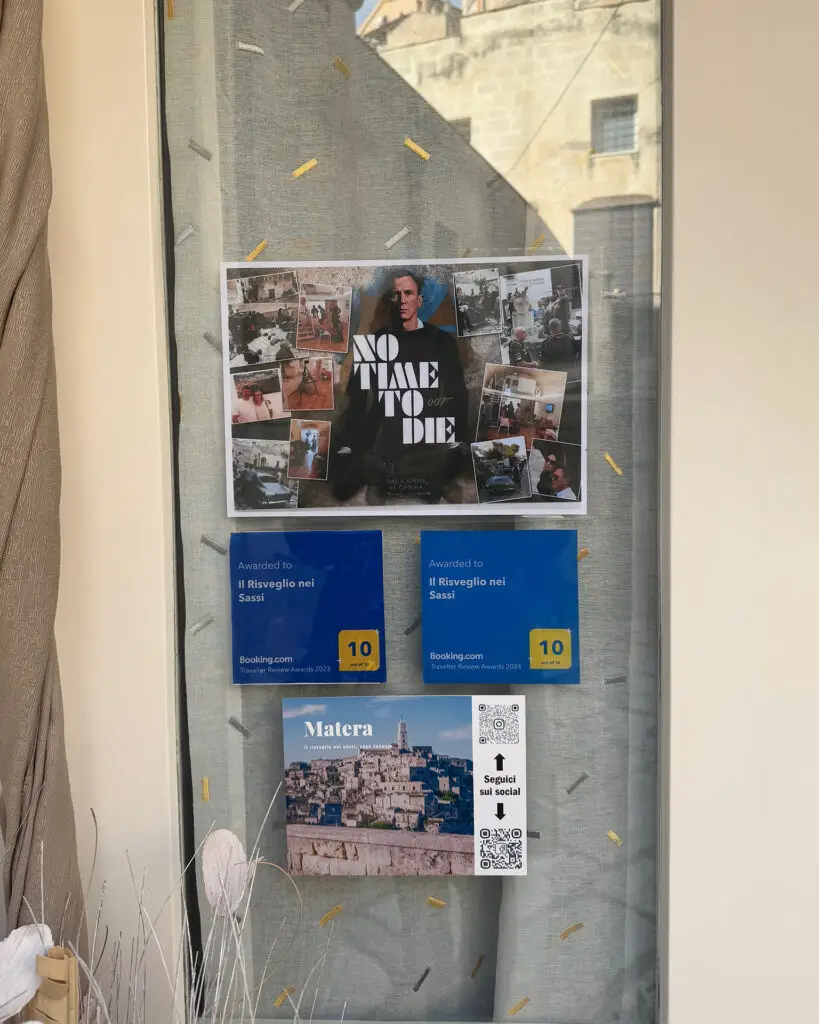
Filming locations have a habit of planting the seeds for future travel. It happened with The Godfather, then Indiana Jones, and Matera, Italy, joined the ever-growing list after I saw its ancient stone streets near the beginning of No Time to Die.
Between the car chase, explosions and general Bond chaos, I was studying the backdrop. This probably says quite a lot about the way I watch films.
I knew little about Matera then, but that brief glimpse stayed with me. Eventually, it led to two nights in the City of Stone, followed by a drive to another filming location in the abandoned town of Craco.
Affiliate disclosure:
This post contains affiliate links. If you book through one of these links, I may earn a small commission at no additional cost to you.
Driving From Bari to Matera
Matera is about an hour’s drive from Bari Centrale. In our rented car, we left the city behind and passed the open plains of southern Italy, watching the sky change quickly from blue to orange and then darkness. It gets dark early in winter, so the countryside disappeared long before we reached Matera.
We arrived in the late afternoon, driving into what looked like a fairly ordinary town. That’s part of Matera’s trick. Approach from its modern side and there’s little indication that an ancient city is about to fall away into the ravine.
Our accommodation was Istituto Sacro Cuore, a monastery lodging booked through monasterystays just outside the historic centre. We arrived at the wrong entrance because no road trip is complete without a few misadventures and a brief debate over whether you’re even in the right place.
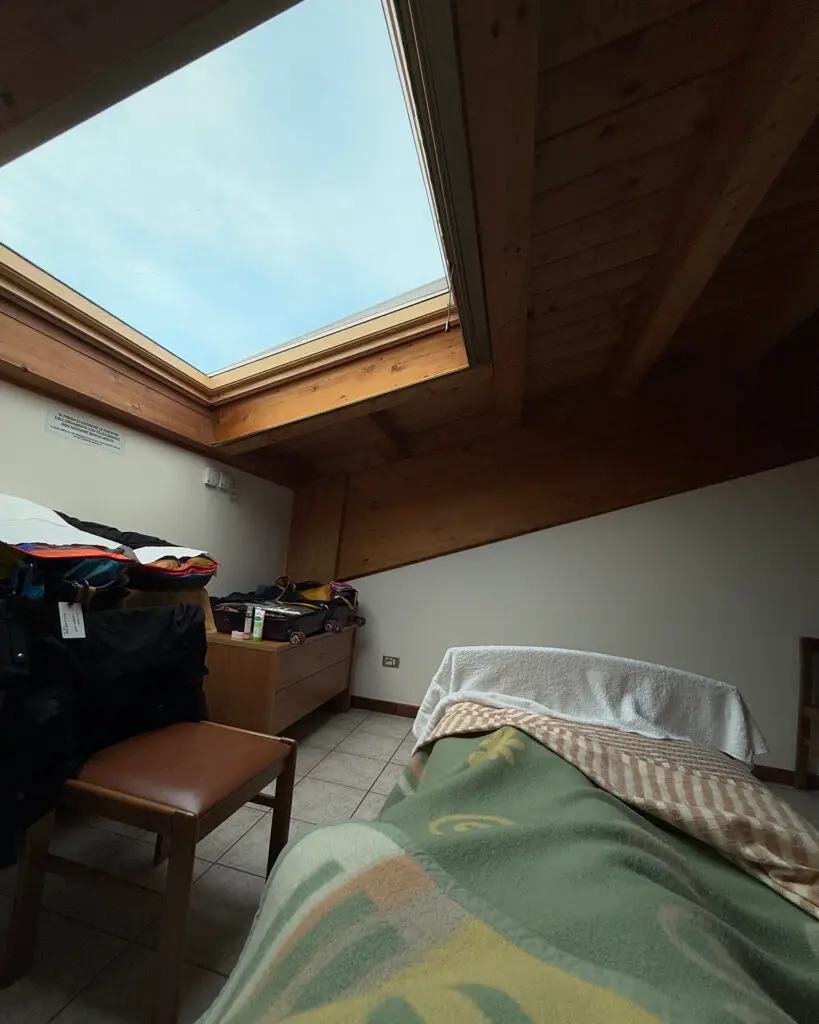
Eventually, we found our way inside. The sisters were excited to welcome their two Singaporean guests and immediately made us feel at home. Our room was spacious, with a skylight beside my bed that we could open to let in the cool winter air. More importantly, we were close enough to walk into the old town without dragging our luggage over Matera’s stone staircases.
You’ll understand the importance of this once you meet the staircases.
Our First Night in Matera
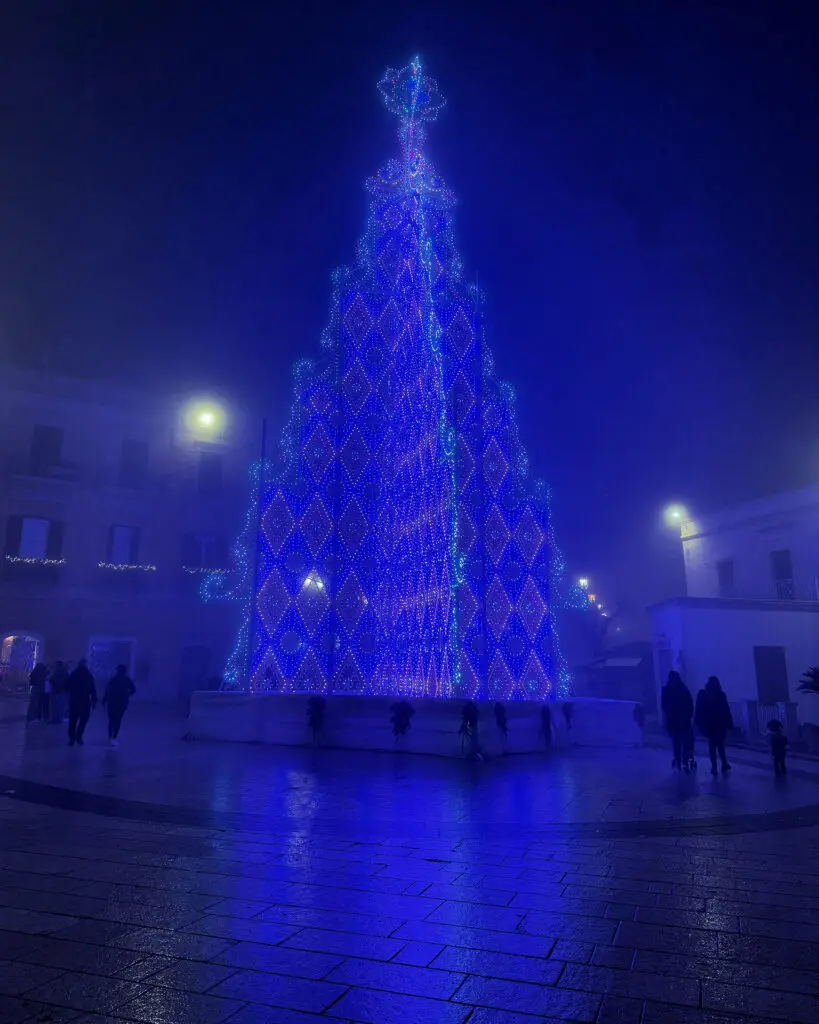
As we reached the edge of the historic centre, the bells of Chiesa di San Biagio, or the Church of Saint Blaise, began ringing for the evening. A luminarie-style Christmas tree stood outside, matching the elaborate light decorations still hanging across town two days after New Year’s Day.
We didn’t have a real itinerary for Matera. The old town was small enough to cover by wandering, so our first evening was mostly about getting our bearings and seeing where the streets took us. A Christmas market was still running in the town square, with music playing as people lingered around the stalls.
Many visitors come to Matera as a day trip from Bari, but we’d chosen to spend two nights here. I wanted to experience the town during its quiet hours, not just arrive with the daytime tour groups, take a panoramic photograph and leave.
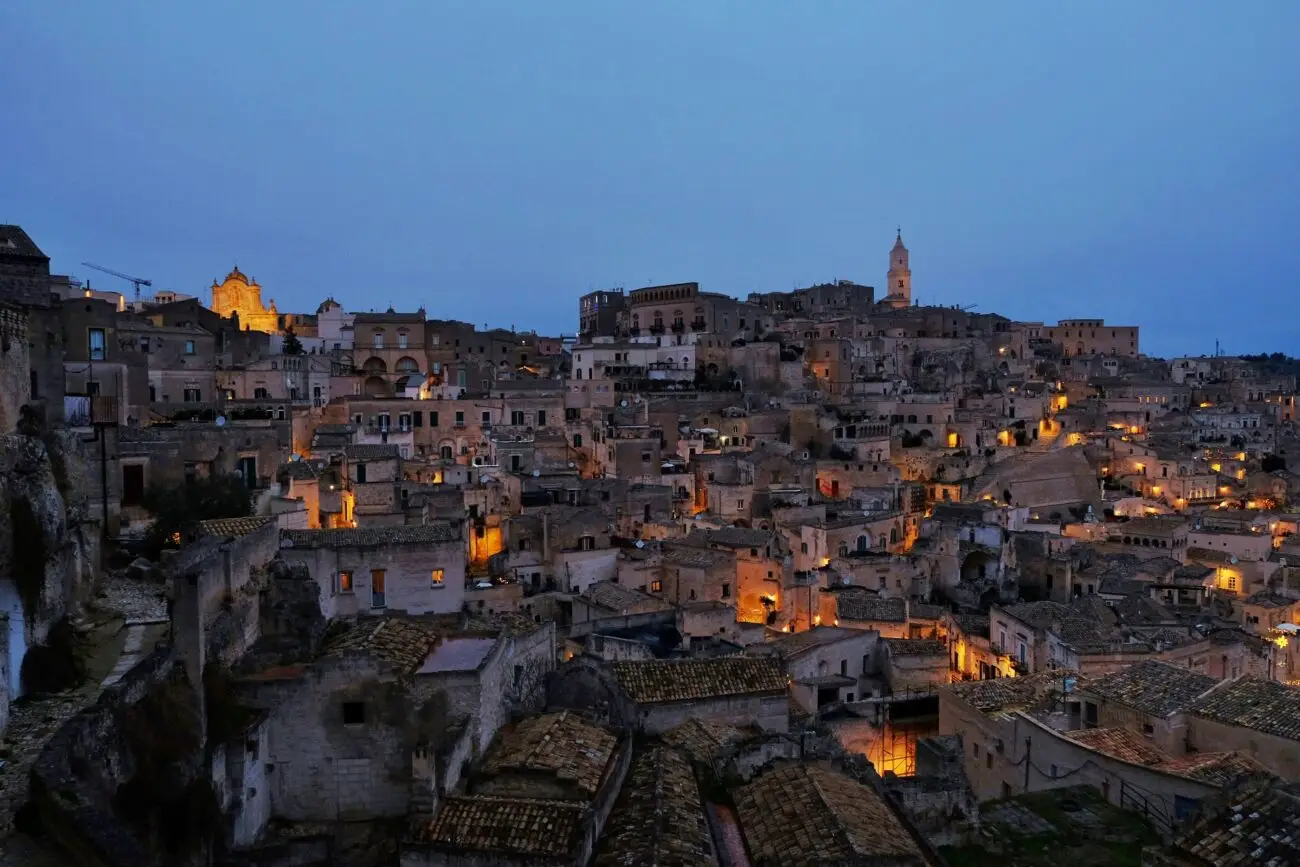
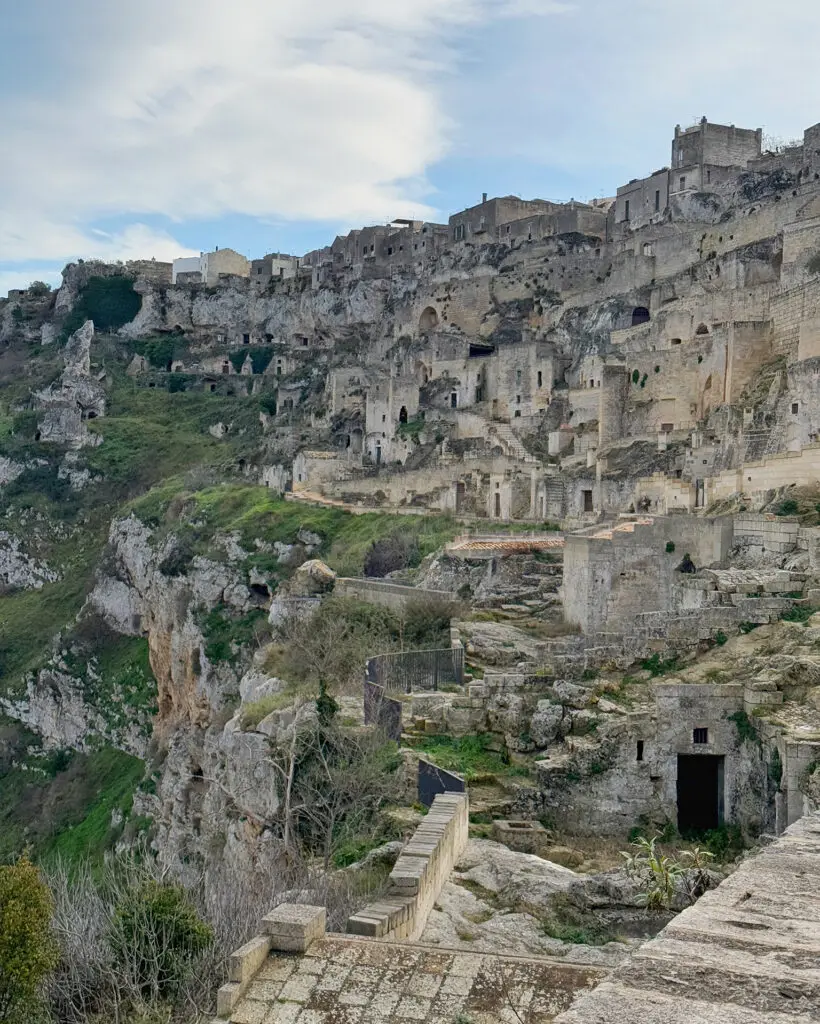
Eventually, we reached one of the viewpoints overlooking the Sassi. Below us, stone houses cascaded down the hillside, some disappearing into shadow while others glowed beneath yellow lamps. From afar, Matera looked like an enormous sandcastle built into the cliffs.
Hillside towns really tug at my heartstrings. Perhaps I lived in one in a past life. Maybe I was a mountain goat.
We ventured farther down into the old town, where everything seemed to be built from stone or carved directly from the mountain. Roads passed over rooftops, alleys disappeared beneath buildings and staircases headed in every possible direction. Matera reminded me of an M.C. Escher lithograph, except with restaurants and fewer people trapped in an impossible geometric nightmare.
We’d travelled down from Venice and Florence, and Matera was the first stop on the southern Italy leg of our trip. The ground was wet and slippery, so we walked carefully. It would’ve been unfortunate to begin this part of the journey by taking the phrase “falling for Matera” too literally.
A Handmade Souvenir From Matera
Even in the darkness, I noticed the silhouette of a solitary man sitting outside a shop, with light spilling through the doorway behind him. Curious, I walked closer and realised he was carving wood.
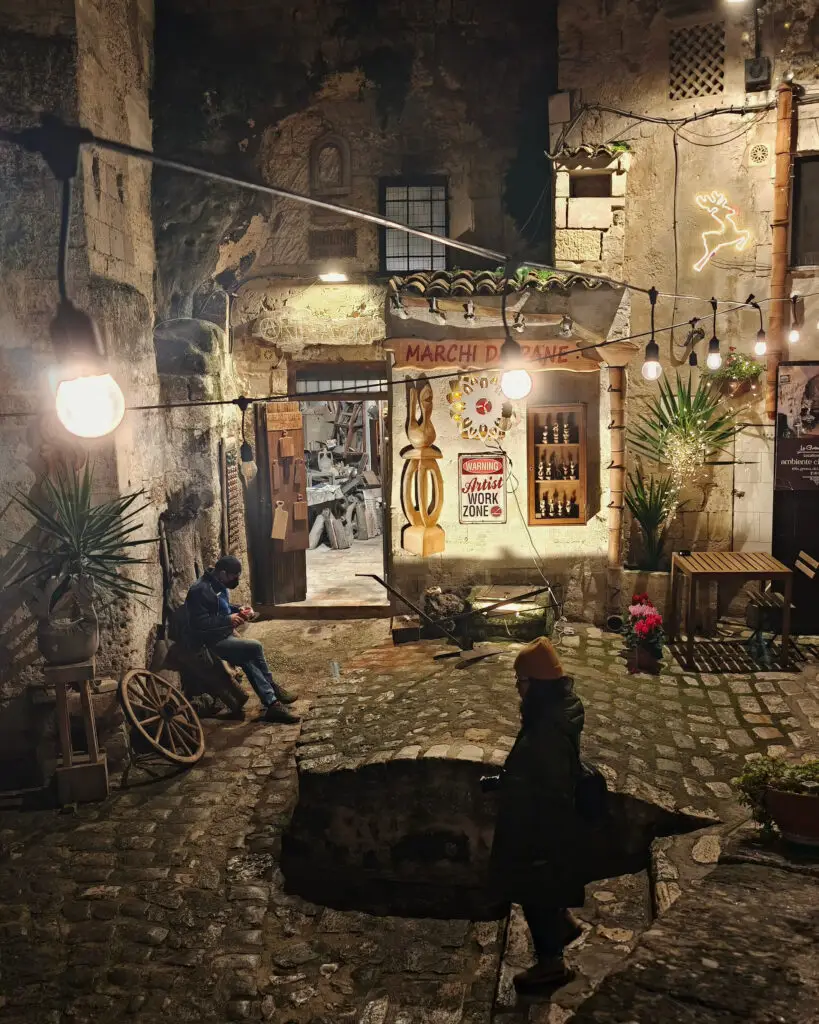
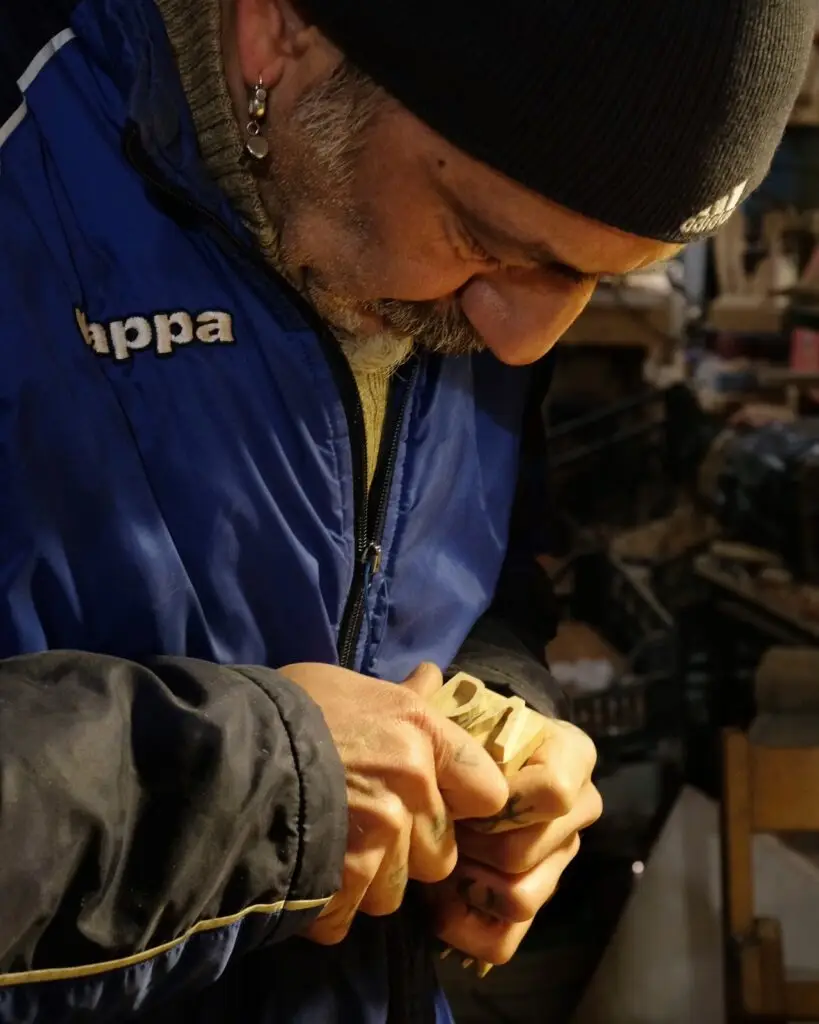
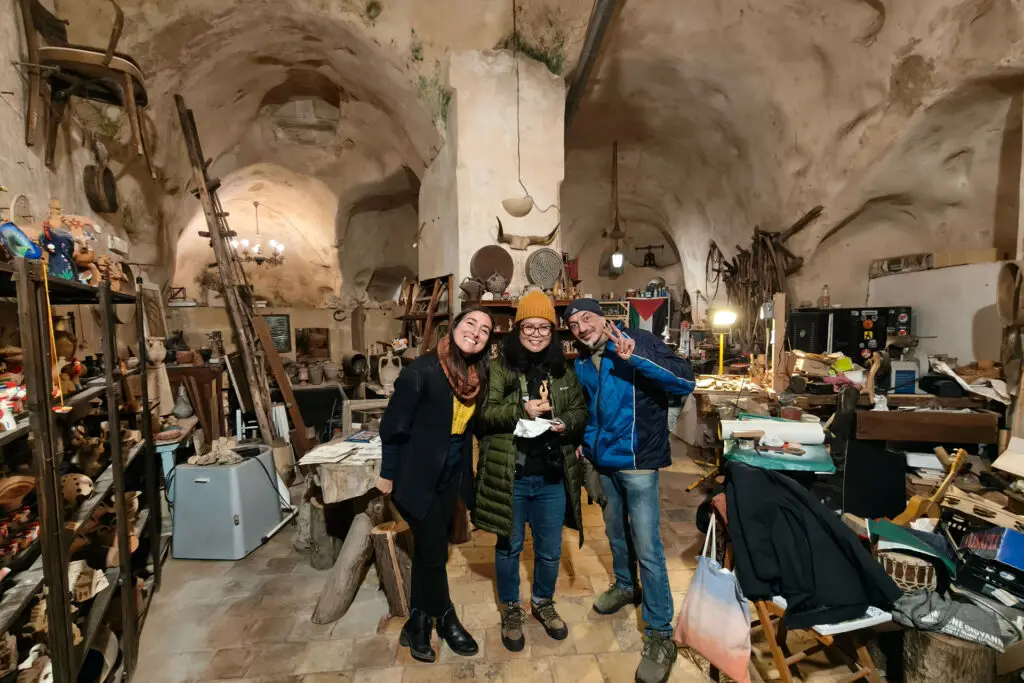
The man was Giuseppe, one of the artists behind Arte Pastorale Matera, where he and Yana create pieces from wood and clay. I can rarely resist a handmade souvenir, especially one that means something to the place I’m visiting. Mass-produced fridge magnets have their purpose, but they don’t normally come with an artist carving your initials into them.
I chose a rooster made from olive wood found in the Basilicata countryside. Giuseppe personalised it by carving my initials into the base.
The rooster is associated with Matera’s traditional cùccù, a stylised whistle usually made from terracotta. It represents protection, good fortune and the arrival of light after darkness. Roosters were also once exchanged during courtship. A suitor would present one to the woman he hoped to marry, and accepting it meant she accepted his courtship.
The more elaborate the rooster, the greater his affection, which does raise questions about the emotional implications of receiving a very plain chicken.
Mine now carries my initials, although no marriage proposal was involved. Perhaps buying it for myself means I’ve married myself instead. At least I know she has excellent taste in souvenirs.
Pizza, Fog and Cheap Thrills
Our trip had blessed us with good weather until that evening, when we began to feel a light drizzle. We took it as our cue to find dinner.
We walked back uphill and found ourselves inside the cave-like Dottoni 3.0, which has unfortunately since closed permanently. After descending one flight of stairs and then another towards the main dining hall, we decided to sit midway down and ordered an entire pizza each.
It’s wonderful how acceptable it is to eat a whole pizza by yourself in Italy. Admittedly, Italian pizzas are generally a sensible size, not some giant coffee-table affair requiring a small committee to finish.
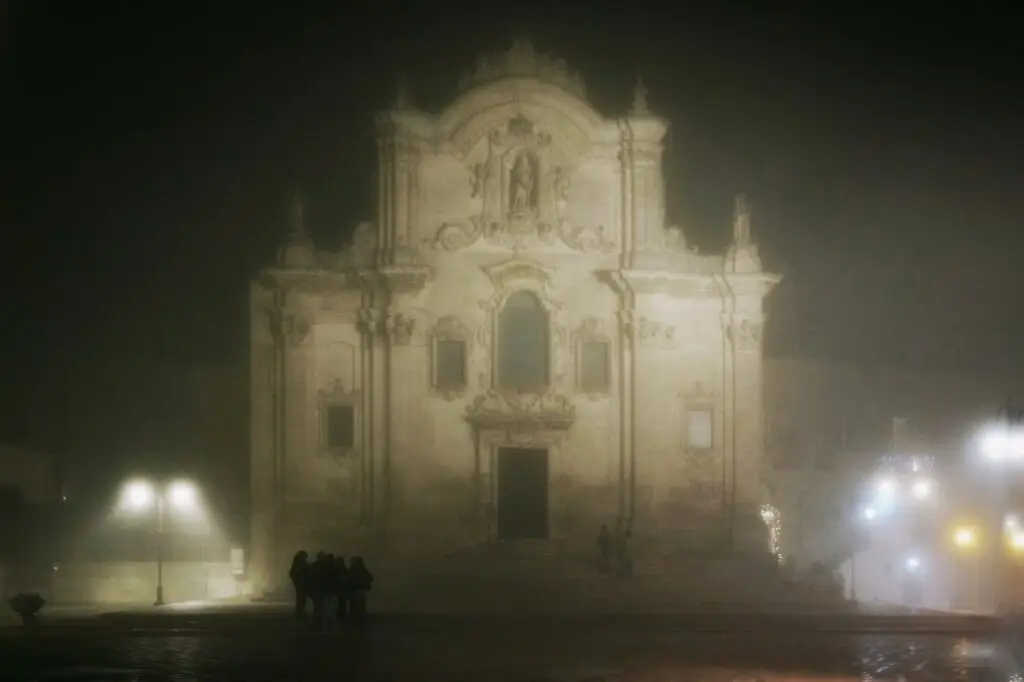
By the time we left, Matera had transformed. The streets were quieter and more mysterious as fog rolled through the old town. I loved it. Singaporeans might call this a cheap thrill because fog is such a simple thing to find delightful, but we don’t have much of it back home. We have humidity, haze and the occasional blast of artificial mist outside a shopping centre. Not quite the same.
The fog made the old stone streets wonderfully atmospheric for photographs. Unfortunately, I’d been sitting beside a heater during dinner, so my camera lens fogged up the moment we stepped outside. I had the perfect scene in front of me and my camera couldn’t see a thing.
Sunrise, Minus the Sun
We were up before sunrise the following morning. Part of the reason for staying overnight was to photograph the sun rising over Matera, but the fog was still clinging to the ravine and the sky remained stubbornly grey.
As the morning warmed, the fog slowly lifted and Matera emerged beneath clear blue skies. The tour groups arrived soon after, being shepherded around the old town, although the winter crowds honestly weren’t that bad.
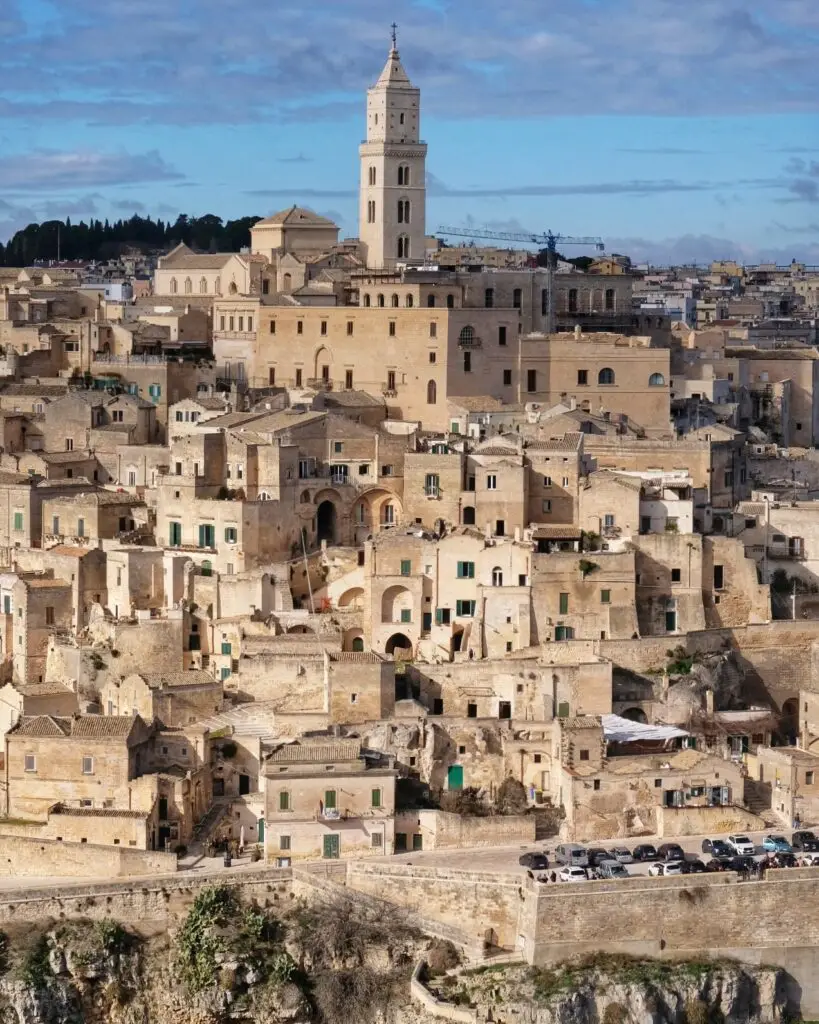
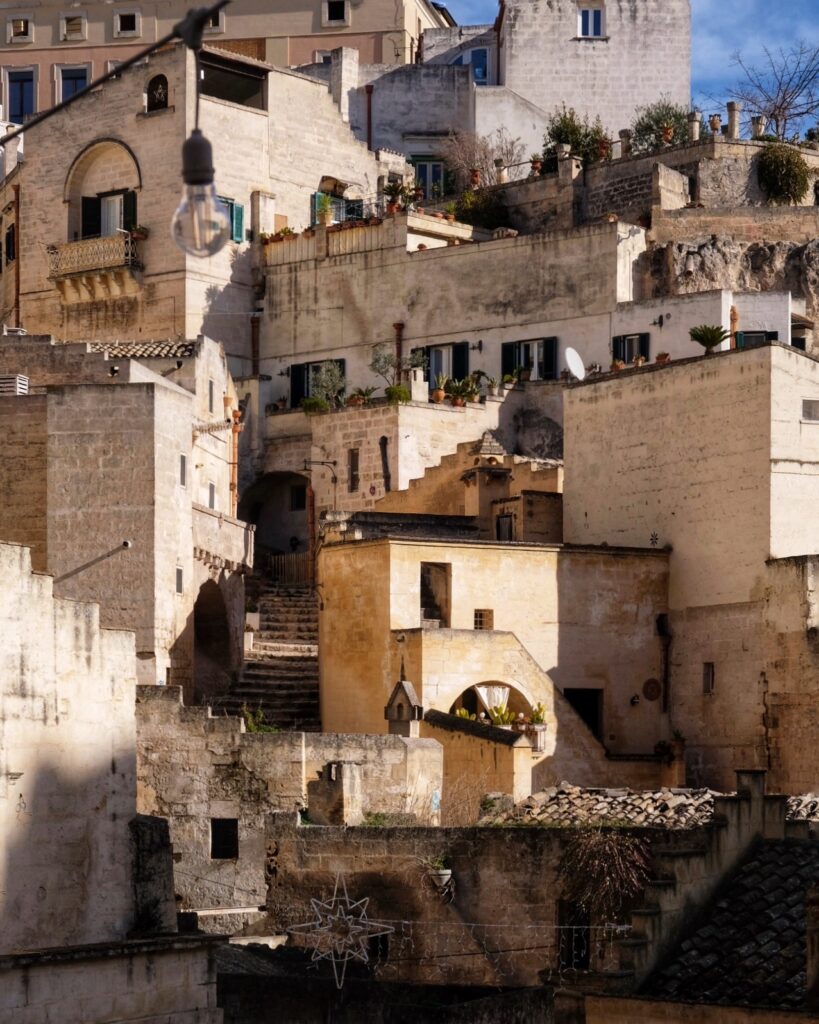
Matera was as beautiful during the day as it had been after dark, but the atmosphere was completely different. This is why I plead with you: spend the night. Stay after the day trippers leave, listen to the church bells and watch the lamps come on across the Sassi. If you’re lucky, the fog may also show up for dramatic effect. Whether your camera cooperates is another matter.
Exploring the Sassi and Gravina di Matera
We continued through Matera without following a strict route. The old town is compact enough to explore on foot, although “compact” shouldn’t be confused with “flat”. We climbed an unreasonable number of steps and I was extremely grateful for the support of my shoes.
In Sasso Caveoso, we visited the Chiesa dei Santi Pietro e Paolo (Church of Saints Peter and Paul), more commonly known as San Pietro Caveoso. Its formal interior, painted wooden ceiling and long central nave felt quite different from Matera’s smaller cave churches.
Rising above it is the Chiesa di Santa Maria de Idris (Church of Saint Mary of Idris), perched on the Monterrone rock. Partly built and partly carved directly into the rock, it looks almost like an extension of the stone itself. I believe it may have been closed when we visited, which would explain why I only remember seeing it from outside.
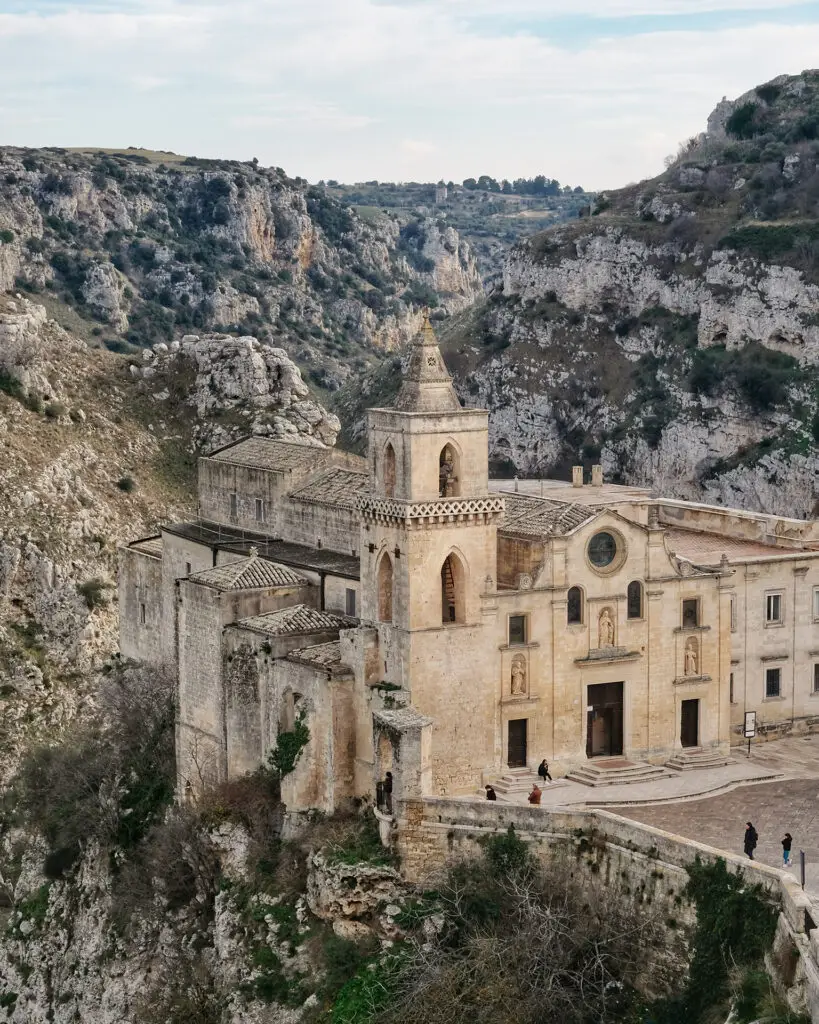
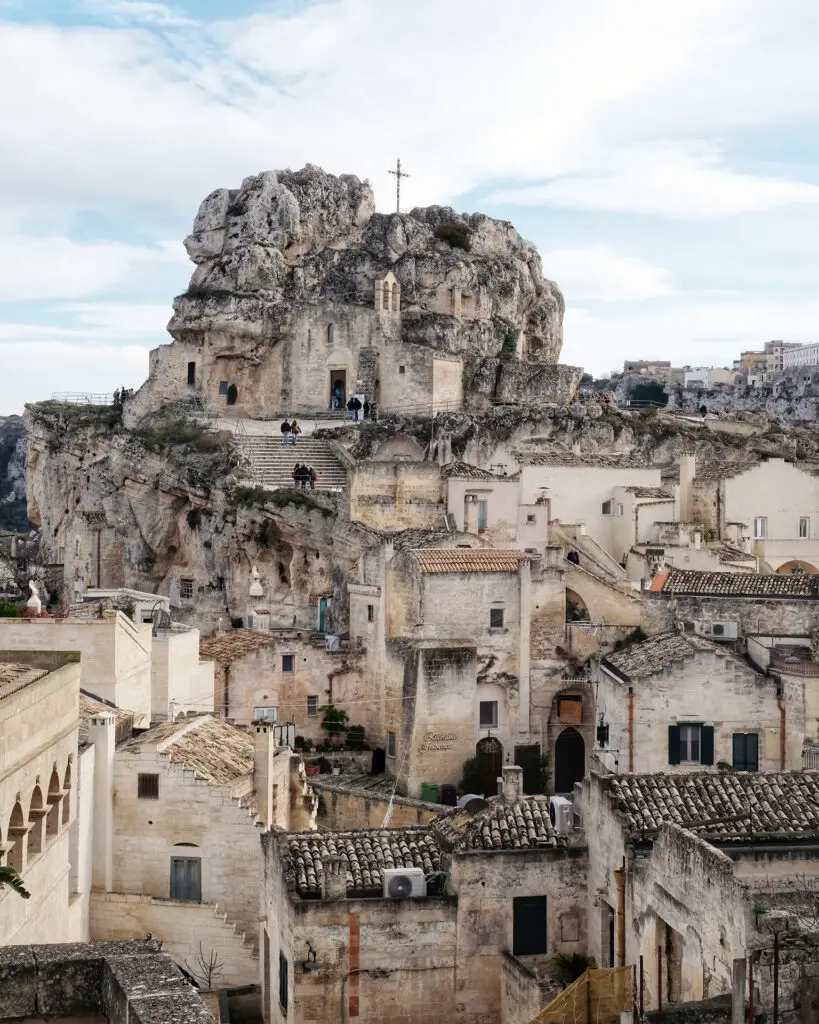
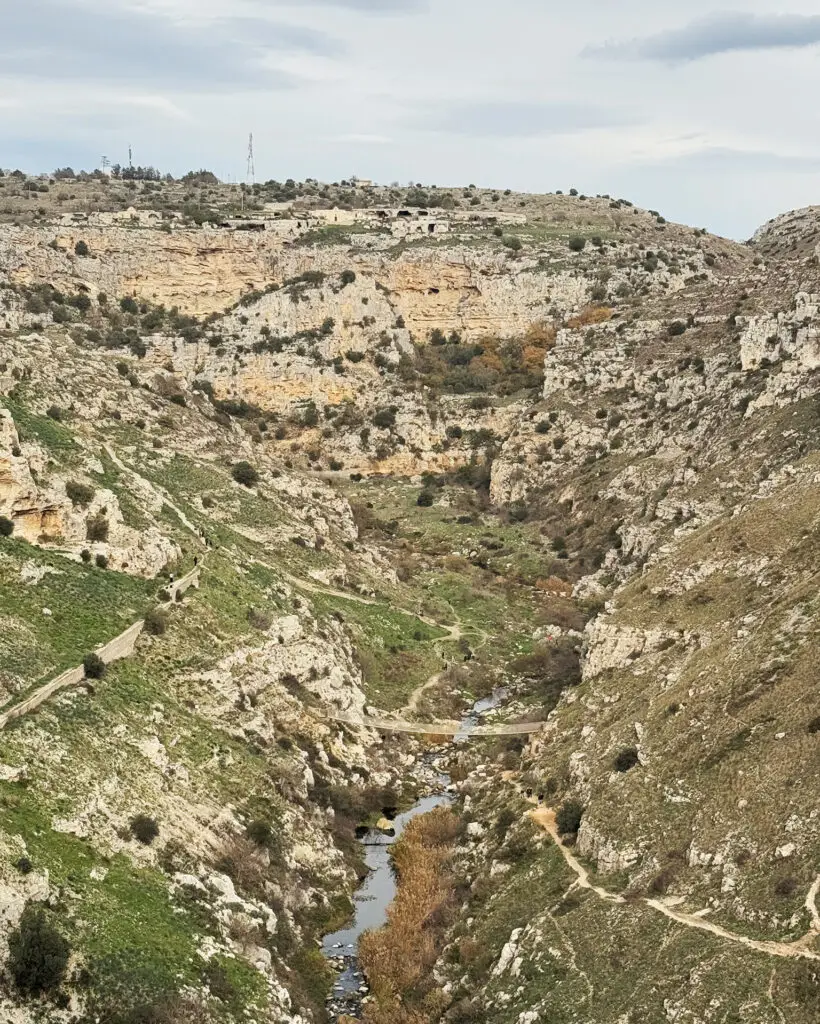
Part of our original plan was to descend into the Gravina di Matera, cross the suspension bridge and climb the other side towards the Parco Regionale della Murgia Materana (Regional Park of the Rupestrian Churches of Matera). From there, we would’ve been able to look back across the canyon towards the Sassi.
However, after all the walking up and down Matera’s staircases, my knees were not keen, even when you switched the letters around.
Instead, we saved the park for the day we checked out, when we could drive to the opposite side. This meant surrendering the hike, but not the view.
The History Inside a Casa Grotta
The Sassi of Matera and the Parco delle Chiese Rupestri are recognised by UNESCO for their ancient rock-cut homes, churches and settlements. People have lived in the area since prehistoric times.
During a visit to the Casa Grotta di Vico Solitario (Cave House of Vico Solitario), we learnt how families once lived inside homes dug into the soft limestone. By the early 20th century, many of these caves were overcrowded and lacked running water, ventilation and proper sanitation. Several children could share one room with the family’s mule, chickens or pigs. In the 1950s, thousands of residents were moved into modern housing. Much of the Sassi remained empty until later restoration brought homes and businesses back into the old city.
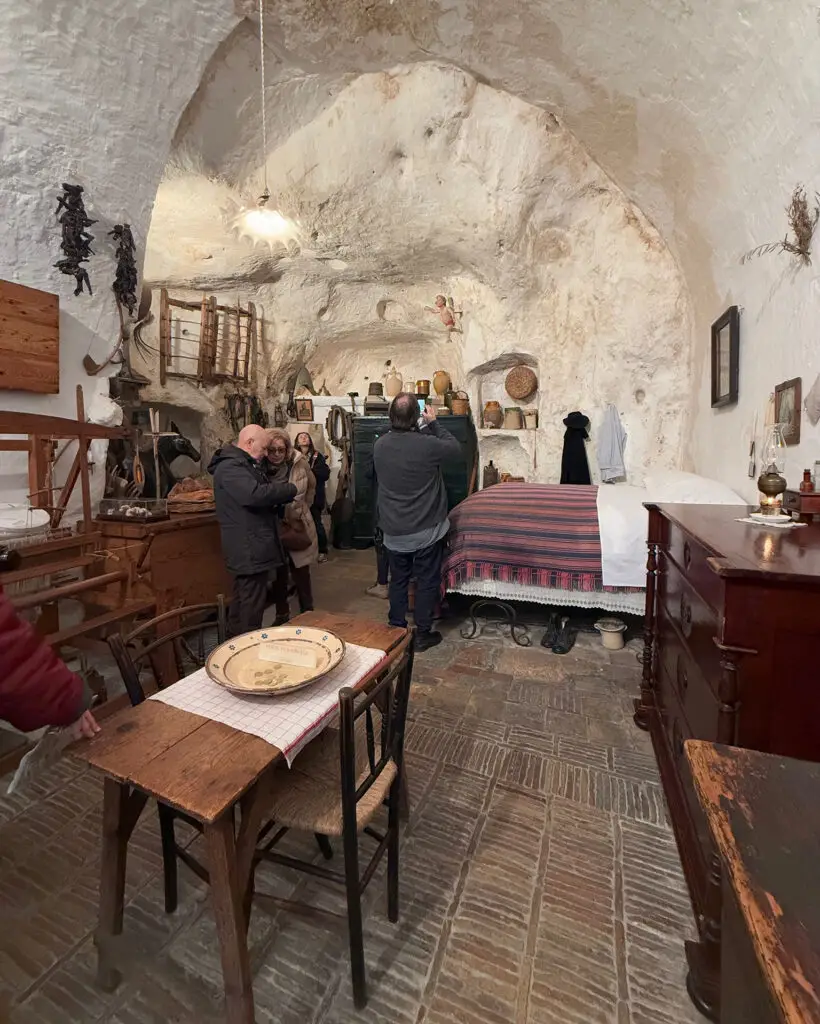
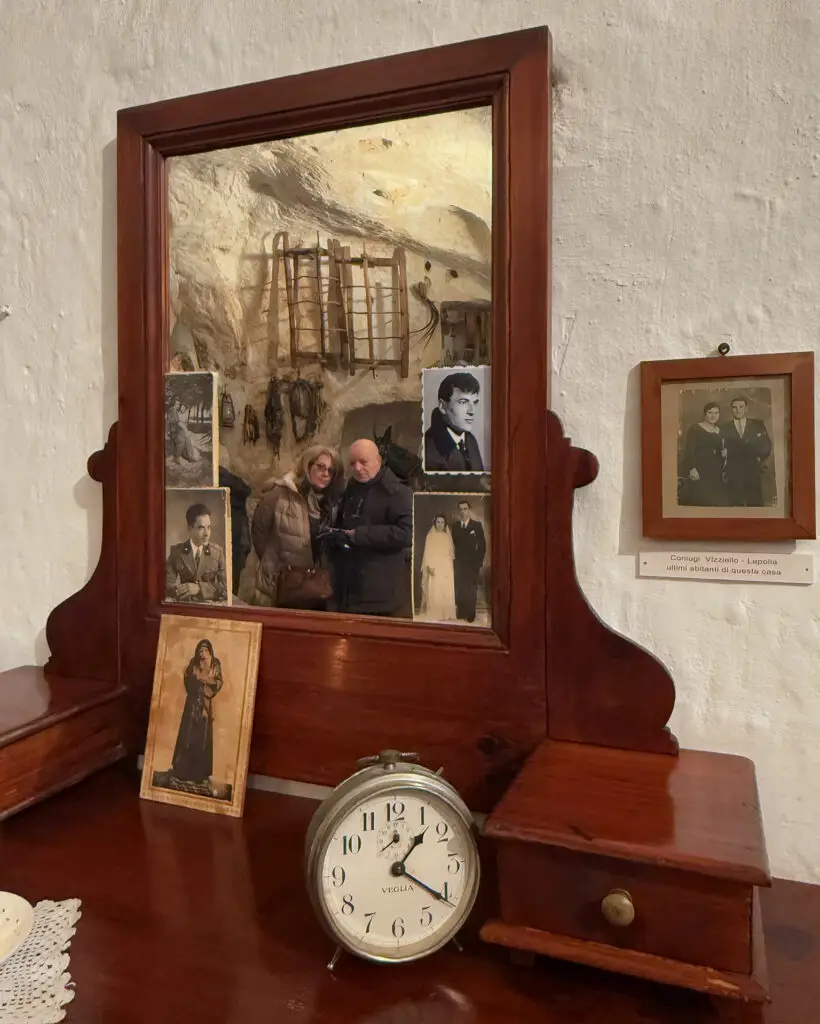
The casa grotta showed how cooking, sleeping, storage and animal shelter were all fitted into one small cave. Some families lived there with as many as six children and their livestock. No such thing as privacy in those days.
The furnishings and tools helped us understand Matera beyond its viewpoints and photogenic cave hotels. The full-price ticket is currently €8 and includes the historic cave house, the neviera, a natural cave and the rock church of Sant’Agostino al Casalnuovo. Check the official Casa Grotta website before visiting, as prices and opening hours may change.
Another Attempt at Chasing the Light
Having missed the sunrise, we hoped we’d have better luck with sunset. Winter, however, was being utterly uncooperative. Clouds covered the sky, so there was no dramatic burst of colour over the Sassi. Just daylight quietly turning into evening.
We made one final sunrise attempt on the morning we checked out. Once again, fog and low cloud hung over the town. It seemed the clearest winter skies only appeared later in the day, once it had warmed up enough for the mist to disappear. Sunrise and sunset were apparently asking for too much.
At least we’d tried. Twice. Sometimes landscape photography is just standing around hopefully while the weather ignores you.
Seeing Matera From Across the Canyon
After checking out, we began a full day of driving. Our first stop was the Parco Regionale della Murgia Materana, approached by road this time.
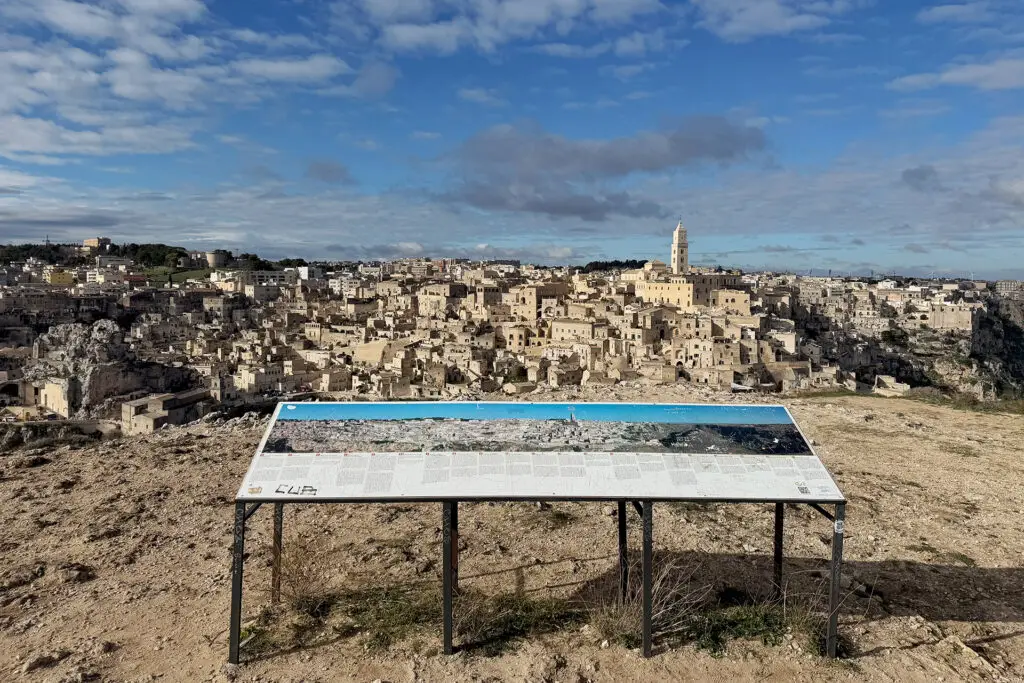
From across the ravine, we could see the entire stone city rising over the canyon. It was a way of prolonging Matera before we finally had to leave. The viewpoint also showed us how the city sits within the surrounding landscape, with homes stacked over the rock and the Gravina cutting through the valley below.
Matera may not be as ornate as Florence or as conventionally romantic as Venice, but it has a presence entirely its own. Two nights gave us enough time to see its streets in daylight, darkness, rain and fog, with several unsuccessful attempts at photographing the sunrise thrown in.
I’d say we got a fairly comprehensive introduction.
From Matera to the Ghost Town of Craco
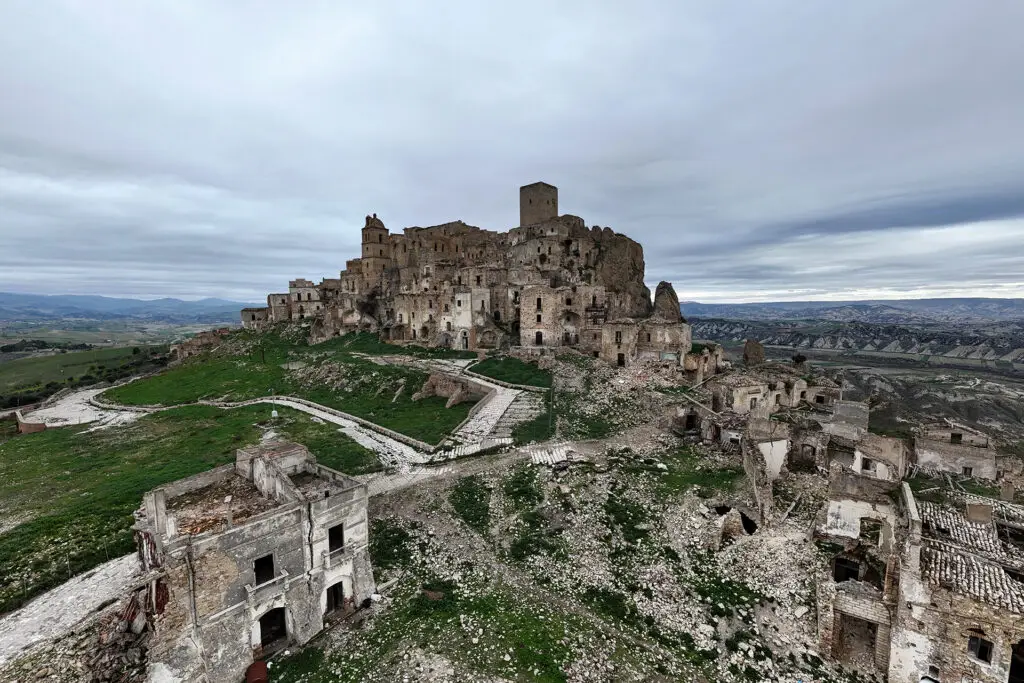
After leaving the park, we drove for around an hour and a half to Craco Vecchia, a medieval town built along a steep ridge above Basilicata’s clay badlands. Recurring landslides damaged the town, with a major one in 1963 forcing residents to relocate. Floods and the 1980 earthquake caused further damage, leaving the old centre deserted. Craco later appeared in films including The Passion of the Christ and Quantum of Solace. Clearly, there are more filming locations on my travel wish list than I’d realised.
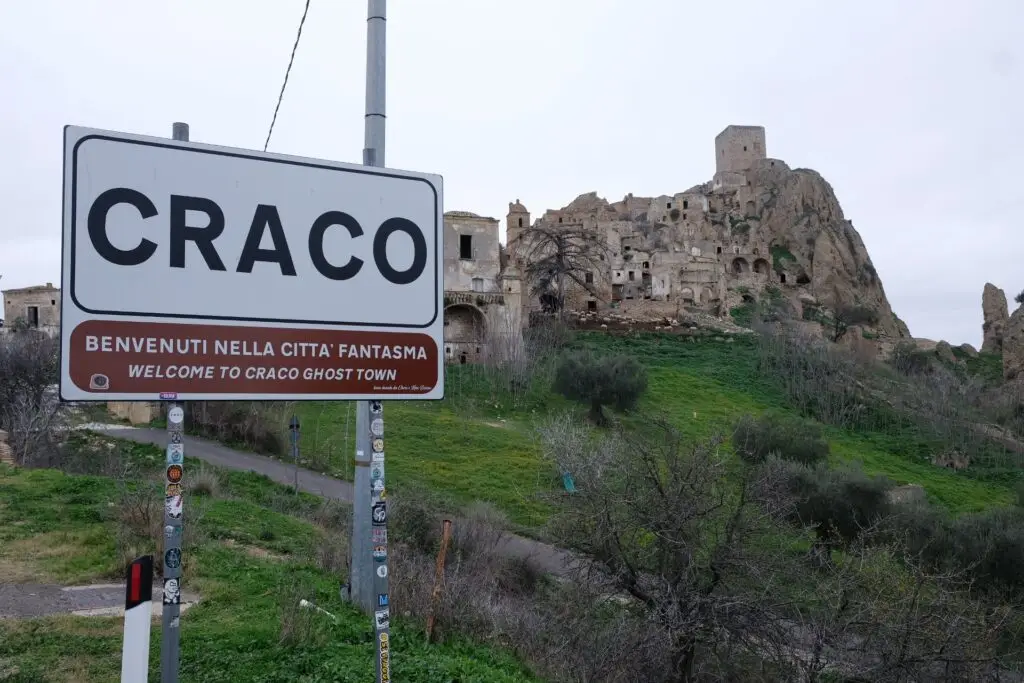
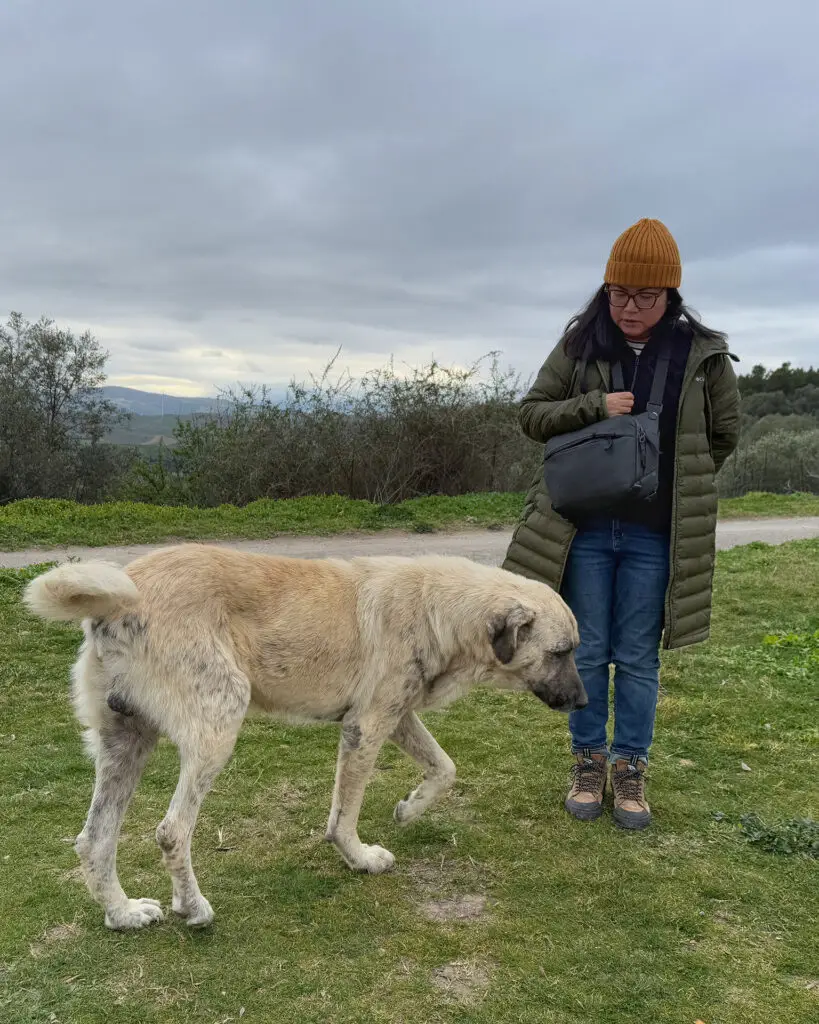
Guided visits are offered occasionally, but access can change because of the unstable buildings, so check before making the drive. From where we stood, however, Craco didn’t feel completely abandoned. We saw a shepherd and his sheep at the base of the ghost town, while a very large dog greeted us as we parked. Perhaps Scooby-Doo came here to retire after years of ghostly adventures.
We’d brought a drone, allowing us to fly over the ruins and see the abandoned town from above. There was nothing else around us. Nothing. Just rocky terrain, the remains of a town along a ridge and skies for days.
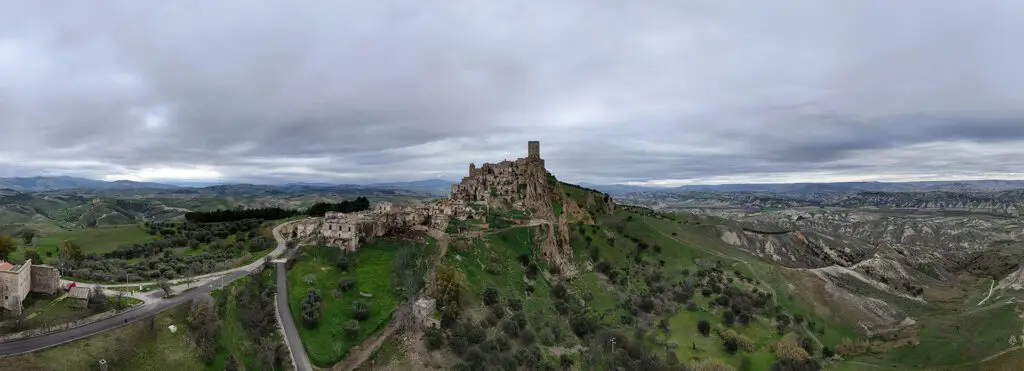
Craco felt like a fitting final stop to our time in Basilicata. Between Matera’s ancient Sassi, cave homes and fog-covered streets, and the haunting ruins of Craco, those two nights felt remarkably full, though I still wished we’d had more time.
Eventually, we packed up the drone and continued towards our next base, the White City of Ostuni.
Looking for tours in Matera? There are several ways to explore the city, from guided walks through the Sassi to hikes across the Gravina and James Bond filming-location tours. You can browse some of the available Matera tours and activities below.
Practical Tips for Visiting Matera Italy
- Stay for at least one night. Two nights let us explore without rushing and see Matera before and after the day trippers.
- Visit the Sassi in daylight and after dark. They feel like two different places.
- There’s no need for a detailed walking itinerary. The old town is compact enough to cover by wandering.
- Visit a casa grotta to understand the history behind Matera’s cave homes.
- Wear supportive shoes with good grip. The streets are steep, uneven and slippery when wet.
- Don’t drive into the Sassi unless your accommodation has confirmed access. Much of the historic centre is restricted to authorised traffic.
- Winter brings fewer crowds and early sunsets, but fog and cloud can make sunrise and sunset photography unpredictable.
- Download an offline map. GPS can get confused between the different levels of the Sassi. To be fair, so can the person holding the phone.
Hiking to Parco Regionale della Murgia Materana
You can hike from the old town into the Gravina, cross the suspension bridge and climb towards the Parco Regionale della Murgia Materana. This isn’t a separate day-trip activity. The hike begins from the Sassi and can be incorporated into your time in Matera.
Set aside at least two to three hours for the descent, crossing, climb and return, depending on your route and pace. Longer routes through the park will take more time. Wear proper walking shoes, carry water and avoid steep paths during poor weather unless you’re confident about the conditions.
If your knees have no interest in this proposal, drive to the viewpoints on the opposite side instead.
How to Get to Matera From Bari
By car: The journey from central Bari is approximately 65km and takes around one hour. Driving is the easiest option if Matera is part of a longer road trip through Basilicata or Puglia.
By bus: Direct coaches from Bari city centre take roughly one to one and a half hours. Buses also run from Bari Airport, which may be easier if you’re heading straight to Matera after landing.
By train: Matera isn’t connected to Italy’s main Trenitalia network. Trains from Bari are operated by Ferrovie Appulo Lucane, or FAL, from the station beside Bari Centrale. Some services require a change at Altamura, so the bus may be simpler. Check the latest timetable on the FAL website.
Prefer an organised day trip? If figuring out public transport feels like too much trouble, this return bus trip from Bari to Matera includes transport by air-conditioned coach, time to explore Matera and entry to a Casa Grotta museum. You can either wander around on your own or choose the option with a guided walking tour of the Sassi. We travelled by car, so I haven’t personally taken this tour, but it looks like a convenient option if you only have a day to visit Matera from Bari.
How to Get to Matera From Naples
By car: Driving from Naples takes around three to three and a half hours. This is the most flexible option if you’re continuing through Basilicata or Puglia.
By bus: A direct coach is generally the easiest public transport option and usually takes around four hours, depending on the operator and stops.
By train: There’s no direct railway from Naples to Matera. Journeys normally involve a train followed by a connecting bus. Unless the timing works particularly well, a direct coach involves fewer opportunities to accidentally strand yourself somewhere between regions.
Matera was only the beginning of our road trip through southern Italy, but it set the bar ridiculously high. Between the Sassi, the fog, the cave homes and our unplanned detour to Craco, two nights felt both wonderfully full and nowhere near enough. From there, we continued towards our next base in Ostuni and the start of our Puglia adventure.