Waking Up on the Rome to Sicily Train
I’d read about the Rome to Sicily train journey, but nothing quite prepared me for the real thing. I woke to the low hum of the motors and the squeal of wheels on the tracks. Voices drifted in from outside, even though it was still dark. A quick check of Google Maps confirmed that we were in Villa San Giovanni. The moment I’d been waiting for was about to happen.
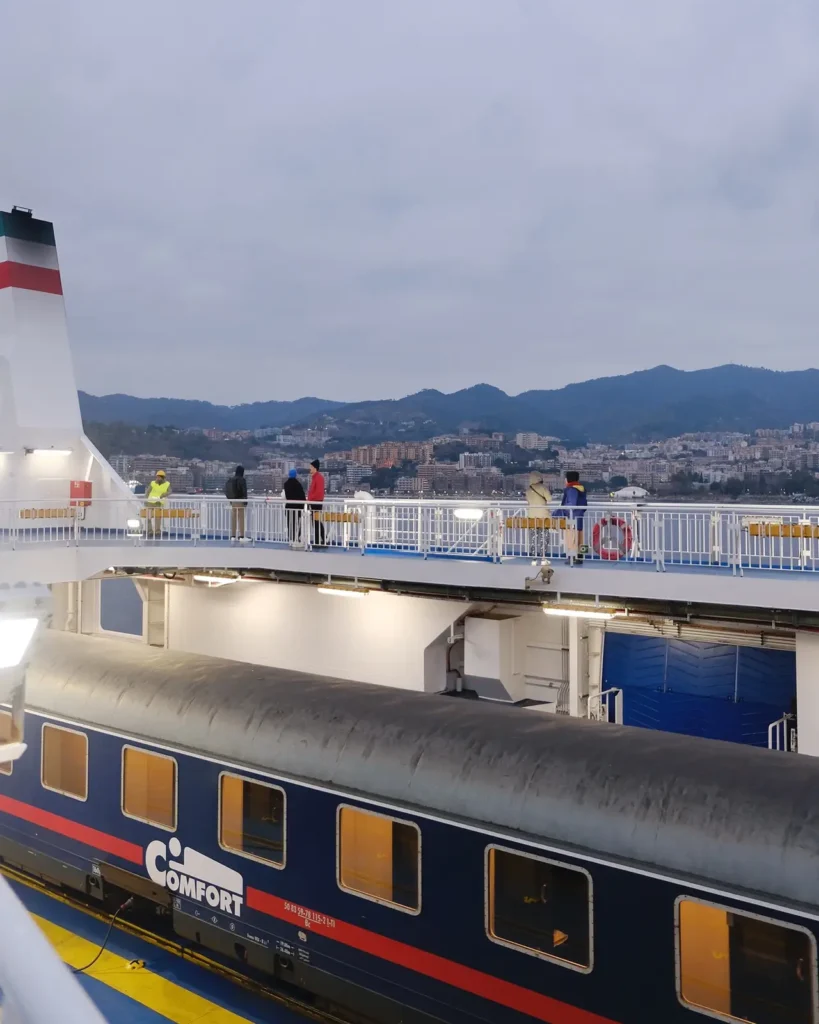
The train gradually came to a halt. Through the window, I watched men in neon yellow vests working beneath the harsh floodlights. It was 6.30 a.m. and the dock was already busy. Our train was being separated into sections before being loaded onto the ferry.
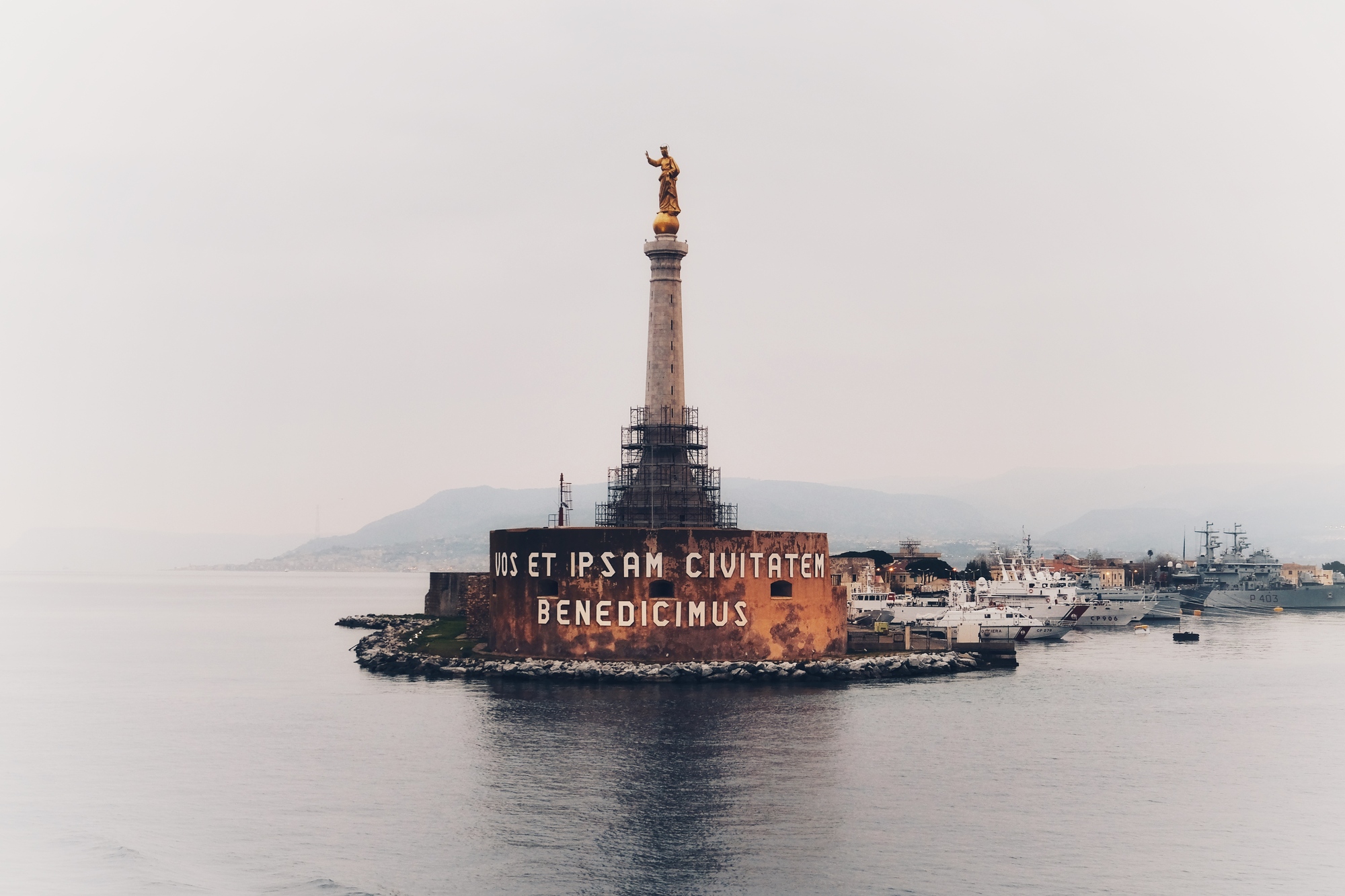
Curiosity got the better of me, so I left the cabin and followed the signs to the ferry deck. A brisk wind hit me as soon as I stepped outside, the crisp air carrying the scent of the sea. As we crossed the Strait of Messina, I could see a golden statue glistening in the distance. It was the Stele della Madonna della Lettera, which watches over the city of Messina. Its inscription, “Vos et ipsam civitatem benedicimus”, translates to “We bless you and your city.”
The crossing took about 20 minutes before we were called back to our cabins. The train rolled off the ferry and onto the tracks again. We’d arrived in Sicily. I was finally here.
Arriving in Sicily and Missing My Stop
I shared my cabin with three other women, and once we were moving again, we were given a simple breakfast of cookies and juice. The train lingered at Messina station before setting off along the Sicilian coast. Outside, the sun began to rise, casting a golden glow over the blue waters.
I was so busy looking at the coastline that I missed my stop. When the train pulled into a station, I checked my phone and realised it was Taormina-Giardini. I scrambled to gather my belongings, and reached the door just as it was closing. The conductor, seeing my frantic expression, gestured in exasperation. I had missed my stop. With a resigned smile, he assured me there was another station in eight minutes, where I could disembark and catch the returning train.
Eventually, I made it back to Taormina, a little flustered but grateful. A minor hiccup, and yet, what’s a good travel story without one?
(I wrote about my one-night stay in Taormina here: Taormina in Winter: A Solo Traveler’s Peaceful Escape.)
Welcome to my Sicilian adventure.

Rome to Sicily by Train: What You Need to Know
Distance and Travel Options
The distance between Rome and Sicily is around 494 km. There are several ways to travel between them, depending on where in Sicily you’re heading and how much time you have:
- Flights: Around one hour to Palermo or slightly longer to Catania, excluding airport time.
- Ferries: Overnight ferries operate from mainland Italy, including routes from Naples. Journey times vary according to the route and operator.
- Trains: The direct journey takes roughly 11 to 13 hours, depending on your destination and service. The train boards a ferry to cross the Strait of Messina.
If you enjoy slow travel, the train gives you something flying doesn’t. You get a bed for the night, coastal views in the morning and the rather strange experience of having your entire train loaded onto a ferry.
Rome to Sicily Train Schedules and Tickets
At the time I travelled, four direct trains ran daily from Roma Termini to different cities in Sicily, with daytime and overnight departures. Timetables can change, so check the current schedule on the Trenitalia website before planning your journey.
I chose the Intercity Notte sleeper train. This meant I could spend a full day in Rome, board the train that night and wake up in Sicily the next morning. Win-win.
Booking Tips:
- Trenitalia usually releases tickets several months ahead, although the exact booking window can vary.
- For my mid-December journey, the schedule only appeared about two months in advance.
- When I travelled, fares started at €39.90. Current prices will depend on the date, destination and type of seat or cabin.
- Sleeper cabins, particularly private and women-only options, can sell out quickly.
The daytime trains have standard and first-class seating. They don’t have sleeping compartments, but they’re a comfortable option if you’d rather see the scenery along the way.
Overnight trains offer different types of accommodation, including:
- Private single-bed rooms
- Shared two or four-bed cabins
- Women-only shared cabins
I’d planned to book a private sleeper, but work got in the way and I waited too long. Lesson learned.
A useful app: The official Trenitalia app wasn’t available in the Singapore App Store when I travelled, so I used Trenìt! instead. It was useful for checking live train times and platform information.
What to Expect Onboard
Boarding at Roma Termini
Roma Termini is busy, sprawling and not always immediately intuitive, so give yourself enough time to find your platform.
Ticket validation rules depend on the type of ticket you buy. My Intercity Notte ticket was purchased online and didn’t need to be validated. I simply showed the PDF on my phone when the conductor came around. If you buy a paper or regional ticket, check the instructions printed on it or ask at the station, as some ticket types have different requirements.
If you want something to eat before departure, many places inside the station close by around 10 p.m. Mercato Centrale was open until midnight when I travelled and had a much better selection.
Sleeper Cabin Features
The sleeper cabins are compact but functional. Mine had everything I needed for the night:
- A made-up bed with clean sheets and a pillow
- A power socket for charging my phone
- Individual temperature controls, which kept the cabin warm despite the winter cold
There isn’t much room to move around, particularly in a shared cabin, but it was comfortable once I’d settled in. If you’ve taken a sleeper train in Southeast Asia, such as the Hanoi to Lao Cai train to get to Sapa, this one feels calmer and slightly more polished. It’s still very much a train, though.
Meals and Snacks
Breakfast was basic: cookies and fruit juice handed out by the conductor in the morning. There isn’t a proper dining car, so bring your own snacks or a light meal if you think you’ll get hungry.
I didn’t pack much food, but I’d plan better next time. If you’re leaving from Roma Termini, pick something up from Mercato Centrale before boarding. A mortadella sandwich or some fresh focaccia wouldn’t hurt.
The Rome to Sicily Train Ferry Crossing
This isn’t just an unusual part of the journey. The Rome to Sicily crossing is the last remaining passenger train ferry route in Europe and one of only a handful left in the world. Another still operates in China, where the Yuehai Railway carries trains across the Qiongzhou Strait between mainland China and Hainan Island. That’s how rare this experience has become.
At Villa San Giovanni, the train is separated into sections and loaded directly onto the ferry. Once it’s safely on board, passengers can leave their cabins and head up to the passenger deck. I stepped outside into the sea air and watched Messina getting closer while our entire train sat below us. The crossing itself only took about 20 minutes, but it was easily one of the highlights of the journey. How often do you get to watch the train you’ve been sleeping on board a ship, sail across the sea and then roll straight back onto the tracks?
Why Take the Train From Rome to Sicily?
Flying is faster, but the train made sense for me for several reasons:
- It can work out cheaper: Once baggage fees and airport transfers are added, a low-cost flight isn’t always as cheap as it first appears. Your train ticket already includes space for your luggage and, if booked, your bed.
- You don’t lose most of a day to travelling: I spent the day in Rome, boarded after dinner and woke up in Sicily. It’s basically a sleepover with a destination.
- You get the coastal views: This applies more to the daytime train. On the sleeper, most of your view will be darkness and your own reflection until morning. Still romantic, in a moody Italian art film sort of way.
- The journey itself is memorable: You’re riding a train onto a ferry, crossing the Strait of Messina and waking up in another part of Italy. It isn’t just transport. It becomes part of the trip.
Is the Rome to Sicily Train Journey Worth It?
Flying would’ve been quicker, but I’m glad I took the train. I got to spend a full day in Rome, sleep for most of the journey and wake up beside the Sicilian coast. The ferry crossing alone made it worth doing.
Would I take the Rome to Sicily train again? In a heartbeat. I’d just pay closer attention when we reached Taormina.
Planning to Explore Sicily?
If you’re continuing your journey across Sicily, you might enjoy these posts: